Operations | Monitoring | ITSM | DevOps | Cloud

The latest News and Information on Log Management, Log Analytics and related technologies.

Ep 36: Do not resuscitate: Legacy tech in modern medicine

In this episode of Masters of Data, we dig into the cybersecurity nightmare that is modern healthcare IT, from ransomware attacks shutting down entire hospitals to IoT medical devices running software older than some of our passwords. We explore why healthcare organizations make such attractive targets for cybercriminals, and why the combination of life-or-death stakes, skeleton-crew security teams, and Windows-95-era equipment is a recipe for chaos.

Digital Trading: Why "Healthy Systems" Still Lose Trades

Digital trading firms operate in environments where milliseconds determine profit and loss. During volatile market conditions, platforms can appear fully operational while execution quality quietly degrades. When prices shift in so quickly, even a minor drift in your order-routing path means your competitors are exploiting the delta, while your platform appears perfectly green. For trading firms, observability is not just about uptime.

Pull Request Velocity as a Proxy for AI Usage for Software Development

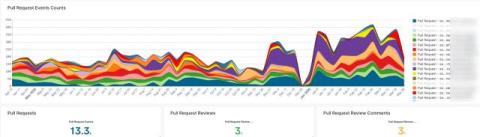
While AI have usage has been growing steadily for the last several years, the LLM models noticeably improved around the end of 2025. Specifically, they become more viable for software development. We are seeing the results. The feature and product delivery has picked up. One way to visualize this is by looking at the number of pull requests for your organization / software development teams. This chart shows the number of Github pull requests created by a team. Can you spot when AI usage increased?

Mastering the Trace Drilldown: How to Reduce MTTR with Coralogix

Stop the "Scavenger Hunt" during incidents. In this video, we walk through the new Coralogix Trace Drilldown, now GA for all customers. Learn how to move from high-level trace views to deep span insights in a single, unified workspace—without ever losing context. Whether you're investigating a latency spike or a failing microservice, the Trace Drilldown helps you answer "Where is the bottleneck?" from three different perspectives in one frame. What you’ll learn.

Logging in Next.js is hard (But it doesn't have to be)

A typical Next.js deployment can execute code in up to three different runtimes: Edge, Node.js, and the browser. You may already be capturing logs from server-side code, but if you are not capturing the full request from middleware through server rendering to the browser, you are missing a lot of debugging info when things go wrong. TL;DR: A typical Next.js deployment can run in up to three environments; Node, Edge, and the browser.

Top 12 Distributed Tracing Tools in 2026: Complete Comparison & Reviews

Distributed tracing has become essential for modern software teams. As applications evolve into complex distributed systems with microservices, APIs, databases, and third-party integrations, understanding how a single user request travels through your entire stack is no longer optional, it’s critical for maintaining performance, reliability, and user satisfaction.

Beyond the Data Lake: Leading Cross-Domain Operational Intelligence

As we wrap up RSAC, one theme that repeatedly emerged in conversations with security leaders is that the modern enterprise has reached a critical inflection point where the velocity of machine-generated telemetry has outpaced the capacity of traditional architectures. This trend requires an approach that moves beyond the storage of information to the activation of it in ways that don’t simply exacerbate alert fatigue.

Cribl Search Demo: Security Investigation

In this demo, Nate Zemanek , Staff Solutions Engineer, shows how Cribl Search runs fast investigations. As an open data platform, Cribl Search lets you pull data from multiple sources and query everything from a single pane of glass. You’ll see how to run fast queries with the new lakehouse engine, search historical data with a federated approach, and bring everything together for full context. Then, use Notebooks to collaborate and share findings across teams to understand what happened—faster.