With the dawn of microservices and serverless, event-driven architectures have become the way to go when building a new system in the cloud. This approach has allowed for greater scalability, as the system can easily adapt and respond to changes in traffic or demand without having to overhaul the entire architecture. Additionally the Event-driven approach means your application is mainly concerned with routing event data to the right services.

Instrumenting your code is essential to understanding your system’s performance and diagnosing issues as they arise. Traditionally, this was accomplished using proprietary vendor libraries, causing major lock-in. Enter OpenTelemetry. OpenTelemetry is an open-source project that provides a set of APIs, SDKs, and integrations for instrumenting code.
Serverless developers are undoubtedly familiar with the challenge of cold starts, which describe spikes in latency caused by new function containers being initialized in response to increasing traffic. Though cold starts are usually rare in production deployments, it’s still important to understand their causes and how to mitigate their impact on your workload.
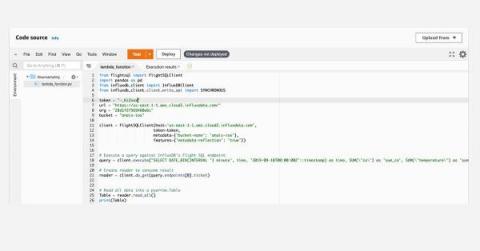
This tutorial covers how to perform downsampling with the new InfluxDB storage engine, InfluxDB IOx, in InfluxDB Cloud (available on AWS us-east-1 and AWS eu-central-1 starting January 31st) using AWS Lambda. This tutorial describes how to: InfluxDB IOx addresses key user needs including (but not limited to): We achieved these goals by building InfluxDB IOx on the Apache ecosystem (Apache Parquet, Apache DataFusion, Apache Arrow, and Apache Flight SQL).