Operations | Monitoring | ITSM | DevOps | Cloud

Flamegraphs Find It. Replay Proves It.

I made an API endpoint 13 times faster. Then I realized my first verification only checked the status, headers, and response schema. I had not checked the totals. I had made the bug faster. That is the problem with giving an AI coding agent one kind of evidence. A CPU profile can show where the application is slow, but not whether an optimization preserves behavior. A traffic replay can prove that behavior stayed stable, but not explain why the code burns CPU.

Stop Writing Log Lines: Use eBPF to Catch PII and Credentials

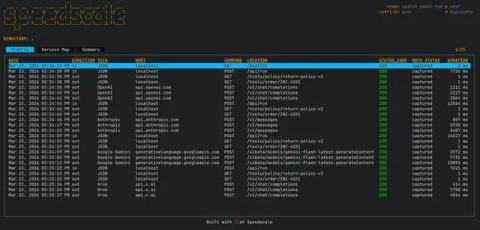
Tired of out-of-control log expenses and manual logging discipline? Discover next-generation observability with Speedscale. By using eBPF to record full-fidelity data right off the wire, you can instantly run full-text searches, track down leaking PII, and securely map out credentials across HTTP, Postgres, gRPC, and more—all without writing a single log line. Learn more: speedscale.com.

eBPF: Preventing Garbage HTTP Payloads When Reading Kernel Scatter-Gather Buffers

Recently someone on our team opened a traffic snapshot and found an HTTP request that was captured with our eBPF capture agent, nettap. Our protocol dissector parsed most of the response correctly, but that correctness ended once the response headers were processed. What they ended up with was a recording of an HTTP request/response where the response body was just an incorrect collection of garbage binary data when it should have been JSON text.

Two confident fixes missed this production bug

Every new signup posts a message to our Slack. The format is dull and reliable: Overnight this week one arrived like this: That trailing nothing was the entire incident. No error logs, no alerts. A returning user had signed up, our signup service had attached them to a tenant we deprovisioned back in December, and the only symptom in the whole company was a Slack message that ran out of words.

Imaginary Test Data. Real Token Bill.

Ask an AI for K-pop concert advice without saying the group, city, date, or budget. It may confidently send you to a BLACKPINK tribute night in Cleveland with a $400 resale ticket. The AI was plenty confident. It just had nothing real to go on. That is exactly what happens when developers test AI applications with invented traffic. The test may look reasonable. The result may even pass.

Instant Kubernetes Observability with Proxymock #speedscale #kubernetes #ebpf #devops #cloudnative

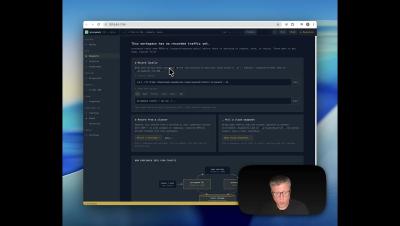
Learn how to get instant observability into your Kubernetes cluster by installing the Speedscale operator and proxymock tool. In this step-by-step tutorial, we walk you through setting up the operator to capture live network traffic (including encrypted traffic, API calls, and database calls) without complex instrumentation or manual configuration.

AI is Exposing Observability's Dirty Secret

The 3 pillars of observability are breaking. For years, dev teams relied on Logs, Metrics, and Traces to know when something went wrong. But now? AI agents are writing, deploying, and changing code in real-time. When an AI hallucination pushes a bug to production, standard monitoring sees nothing wrong.To survive the AI era, we need a 4th Pillar of Observability. Watch to find out what it is and why the old way of monitoring just became obsolete.
Sponsored Post

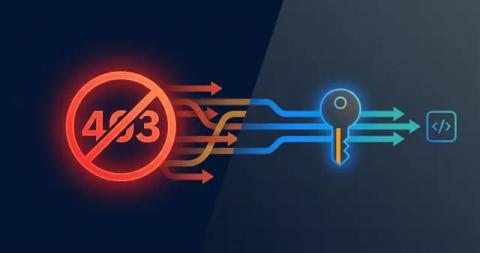
Fixing 403 auth errors when you replay traffic

Trigger warning: this one is about Java, authentication, and Docker Compose files. If that is not your thing, I am sorry, but they are part of life and they are honestly not that hard to work with. Everything here is open source on our GitHub repo, so you can follow along. Recording an authenticated Java flow, replaying it, hitting the dreaded 403, and fixing it with a proxymock recommendation.

AI writes code in seconds, but delivery still takes days

The pitch for AI coding was speed. Claude Code, Copilot, Cursor, whatever you’re running, they all generate business logic faster than you can review it. That part is real. But look at what happens after the code gets written and the numbers get ugly. CircleCI’s 2026 State of Software Delivery Report found AI drove a 59% increase in average throughput.

How to Trace Microservices WITHOUT OpenTelemetry

Learn how to trace complex multi-hop transactions across microservices when OpenTelemetry isn't available or trace parents get lost. This quick tutorial demonstrates how to use full-text search in proxymock (a free CLI and UI tool) to isolate user journeys (like looking up a specific username) and instantly generate waterfall tracing views. Whether you are working locally or in a Kubernetes cluster, you can record API traffic, visualize multi-hop requests, and easily transition those captures into load or regression tests.

The API tests passed. The database didn't.

We shipped v2 of a small products API on a Thursday. Green CI. Green replay. The new search endpoint worked. I went home feeling competent. Friday morning I ran the same traffic against both builds with proxymock and compared the SQL. v2 had added 80 queries on the same HTTP script. A per-product audit COUNT was firing inside the list handler. A startup migration had run ALTER TABLE and CREATE TABLE audit_log. Total DB time was up 70 ms on a demo that should have been boring.

Trace without traces

A customer emailed on a Tuesday: checkout hung for ten seconds. I opened our tracing tool, punched in the time window, and got nothing. The trace was sampled out. We keep 1% of traces, like most shops with real traffic do. The one request that actually mattered was in the 99% we threw away. I spent twenty minutes admiring our observability stack before admitting it couldn’t answer a first-grader’s question: what happened to this person? Here’s what I know now.

AI Agents Write Broken Code 49% of the Time #speedscale #AI #Coding #Tech #DevOps

AI agents write broken code nearly 50% of the time. By adding a traffic-based deterministic evaluation, Speedscale boosted unsupervised bug-fixing quality from 51% to 77% in just 5 minutes. This helped slash token costs and eliminate rework without human intervention. Learn more: speedscale.com.