Operations | Monitoring | ITSM | DevOps | Cloud

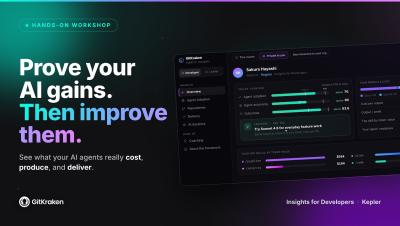
Prove Your AI Gains, Then Improve Them | GitKraken Workshop

Everyone feels faster with AI, but almost nobody can prove it. In this hands-on GitKraken workshop, Jeremy Castile, Scott Ferguson, and Justin Roberts show you how to get a real read on your AI agents: what they actually cost, what they produce, and whether they’re making your team faster, then how to take that data and improve it. You’ll see how to read an agentic workflow across adoption, autonomy, activity, cost, and outcomes in real time, how to spot where you’re overspending, and how to run and right-size multiple agents so you scale your agent work without scaling the bill.

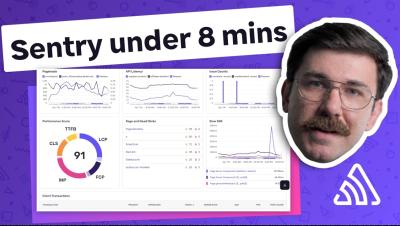
Sentry under 8 mins

If you've never used Sentry, this is the short version. In under eight minutes, we walk through what it does, what it captures, and where to go next. Sentry is an application monitoring platform. It collects errors, logs, timings, and replays, and ties them together with tracing, so you can go from "something broke" to the line of code that broke it without opening six tabs. Here's what we cover: On data: out of the box, Sentry scrubs things like passwords, tokens, and credit card numbers. You decide what else gets collected, and you can choose US or EU storage.

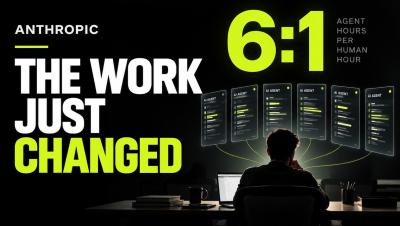
What Anthropic's 6:1 AI Work Ratio Means for Every Business

Anthropic's AI agents are logging 6x more hours than the humans directing them. Is this the beginning of a fundamental shift in how businesses operate? New data from Anthropic reveals how AI agents are transforming the workforce, accelerating software development, and changing what employees actually do every day. But the biggest story isn't just AI productivity. It's what happens next.

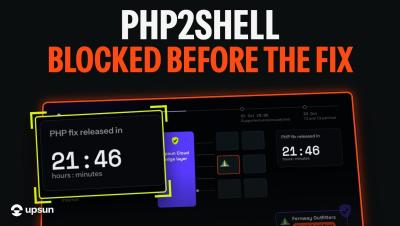
PHP2Shell explained: blocked 22 hours before the patch existed

PHP2Shell let attackers run code on PHP servers without logging in, and updating a CMS or its plugins didn't help. Only a new version of PHP fixed it. In this explainer, we break down how the two flaws work (CVE-2026-109618 and CVE-2026-109619, both rated 9.2 critical) and what Upsun Cloud did between PHP's one-day warning and the fix. We get into.

Amazon told its engineers to stop chasing tokens

Amazon told its own engineers this week to stop tokenmaxxing. The memo circulated internally in September and Amazon published it on Tuesday, Oct. 27. Tokenmaxxing is the practice of using AI as heavily as possible with little regard for whether the output justifies the spend. The memo calls token usage, adoption rates, and code-change counts “deeply flawed” ways to measure a team.

Can you see what your sales org did with $206,000 of AI last month?

Activity categorization classifies every AI request by the work it performs, such as meeting prep, code review or account research, then assigns that spend to the team, person, model and provider behind it. It turns a provider invoice that shows only totals by model and API key into a breakdown finance can allocate, charge back and budget from. CloudZero AI Signals does this as the spend happens.

Shipped: Fit more of your cost data on one screen

Most cost questions get answered the same way. You read a chart and the table under it together. Maybe you spot a jump on the chart, and then you go looking in the table for the service, account, or team that caused it. When you can see more of that table while the chart is still in view, the whole review goes faster. You’re also a lot less likely to lose your place halfway through.

Connecting Cloudflare and Honeybadger with OpenTelemetry

Honeybadger Insights is pretty great. It's even greater when you connect it to Cloudflare and start shipping logs directly from Cloudflare Workers to Insights. If you're already using Cloudflare to distribute your applications, it's easy to set up. Cloudflare Workers logs capture what your application is doing at the edge: console.log() output, uncaught exceptions, and system-generated logs for each request.