Grey's Academy 301: Blockchain, DLT and Splunk
Join us to find out how Splunk works with Blockchain and Distributed Ledgers.


Queen Elizabeth II received a blockchain journal in the post, and was “interested to learn that the publication is the first open access blockchain research journal available both in print and online, according to a letter from her office. In a letter to the British Blockchain Association, which sent the journal, a member of her office said the queen “much appreciated thoughtful gesture,” as first reported by the Financial Times.
This is the the last of a 2-part blog post series regarding Netdata and Geth. If you missed the first, be sure to check it out here. Geth is short for Go-Ethereum and is the official implementation of the Ethereum Client in Go. Currently it’s one of the most widely used implementations and a core piece of infrastructure for the Ethereum ecosystem. With this proof of concept I wanted to showcase how easy it really is to gather data from any Prometheus endpoint and visualize them in Netdata.
The way we ‘data’ is about to change, and Splunk’s Connect for Ethereum (aka EthLogger) is helping organizations to adapt. Splunk Connect for Ethereum enables organizations of all sizes to investigate, monitor, analyze and act upon their rapidly growing blockchain data sets across multiple chains.
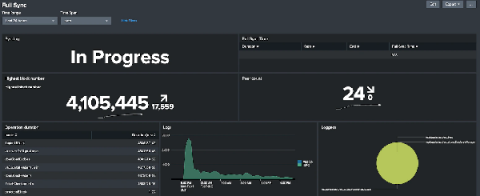
All the work presented in this blog post is open source and available as part of our Splunk Connect for Ethereum repository examples, including the instrumentation of Besu as a Docker container, the configuration of Splunk, and two applications showing how to monitor Besu syncing to the chain.
ETHDenver connects developers, technologists, cypher punks, coders, crypto-economists, designers and makers to build on Ethereum, making it the perfect place to debut Splunk Connect for Ethereum. The use cases we saw added observability to blockchains like Ethereum mainnet and sidechains in real time. As the event went on, use cases and requests continued to pop up (which you'll see below); the app was used to index not just ethereum mainnet, but also sidechains such as xDai and OST Mosaic.
Our Data-to-Everything vision is to bring data to every question, decision and action—blockchain data is no exception. Part of making that vision a reality is getting data into Splunk where you can start to investigate, monitor, analyze and act in order to turn data into doing.