Native support for OpenTelemetry metrics in Prometheus.
I’ve been working with Grafana Tempo for about half a year now, and one thing I like about it is that Tempo requires only object storage for storing traces, which is easy to set up in both cloud environments and on-premises. Another outstanding feature is TraceQL, which allows searching for relevant traces with a powerful query language.
In the previous blog in this series, we delved into the redesigned architecture of Amazon Prime Video and how they integrated different architectural styles for optimal performance and cost efficiency. We also discussed the impact of Amazon’s decision on the concept of a “serverless-first” mindset, highlighting the importance of considering alternative architectural approaches based on specific use cases and requirements.
What is OpenTelemetry? Why is it important? Do SREs need to adopt OTel? An Explain It Like I'm 5.
Distributed tracing is a powerful technique that allows you to track the flow and timing of requests as they navigate through a system. By linking operations and requests between multiple services, distributed tracing provides valuable insights into system performance and helps identify bottlenecks. In this blog post, we will delve into the benefits of distributed tracing, explore its relevance for various application architectures, and uncover how it operates behind the scenes.
OpenTelemetry vs. Prometheus - Difference in architecture, and metrics.
As an SRE, have you ever had a situation where you were working on an application that was written with non-standard frameworks, or you wanted to get some interesting business data from an application (number of orders processed for example) but you didn’t have access to the source code?
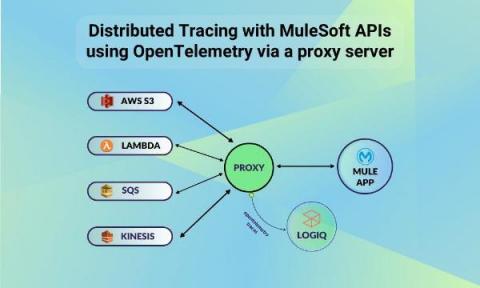
In the previous article, we talked about Distributed Tracing with MuleSoft APIs using OpenTelemetry. In this post, we’ll go through the process of integrating Distributed Tracing with MuleSoft APIs using OpenTelemetry via a proxy server. The purpose of this article is to demonstrate how we can instrument a legacy mule app with open telemetry without making changes to the existing app. Here, we’re showing an example of getting data from a header as well as a query parameter.
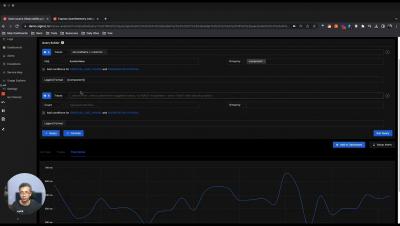
What is OpenTelemetry Collector, Architecture, Deployment and Getting started.
Core Web Vitals (CWV) are Google's preferred metrics for measuring the quality of the user experience for browser web apps. Currently, Core Web Vitals measure loading performance, interactivity, and visual stability. These are the main indicators of what a user’s experience will be while using a web page.
Elastic APM supports OpenTelemetry on multiple levels. One easy-to understand scenario, which we previously blogged about, is the direct OpenTelemetry Protocol (OTLP) support in APM Server. This means that you can connect any OpenTelemetry agent to an Elastic APM Server and the APM Server will happily take that data, ingest it into Elasticsearch®, and you can view that OpenTelemetry data in the APM app in Kibana®.
Distributed tracing enhances observability by providing detailed insights into the performance, behavior, and dependencies of your distributed system. It empowers you to proactively identify and resolve issues, optimize performance, and deliver a reliable and high-performing application.
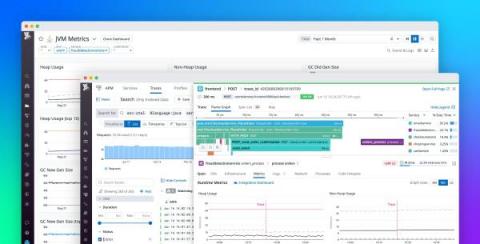
OpenTelemetry (OTel) is an open source, vendor-neutral observability framework that supplies APIs, SDKs, and tools for the instrumentation of applications and services. As part of our ongoing commitment to OTel, we are excited to announce support for the ingestion and visualization of runtime metrics from OTel-instrumented applications in Java, .NET, and Go.
Since ServiceNow launched the Service Graph Connector for OpenTelemetry in the Innovation Lab in April 2023, we’ve seen customers use it in pre-production environments. Today, I’m excited to announce that the Service Graph Connector for OpenTelemetry is generally available for production. Service Graph Connectors allow customers to load large volumes of data quickly and easily into their configuration management database (CMDB).