Operations | Monitoring | ITSM | DevOps | Cloud

OpenRouter Alternatives: How to Choose a Model API Gateway for Your Stack

Teams searching for openrouter alternatives are usually trying to solve a practical problem: they need a different model catalog, billing setup, routing behavior, modality mix, deployment boundary, or support arrangement. There is no one-for-one replacement that is best for every workload. A useful comparison starts by classifying the service you need, then tests a short list against real requests.

1,238 API errors in two days, and every response said 200 OK

The query count in our snapshot drawer went blank, and the unit test for that request kept passing. When we went looking in recorded traffic, the API gateway had rejected that request 210 times in a single recording. Every one of those rejections came back as 200 OK. So we searched the rest. We record our own API gateway with Speedscale, and two recording windows from November 3 to 5 (about 38 hours between them) held 1,238 responses with gRPC status INVALID_ARGUMENT. All 1,238 returned HTTP 200.

The Truth About End-to-End Testing Explained #softwaretesting #endtoendtesting #devops #qualitytest

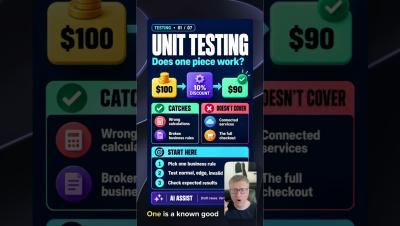
End-to-end (E2E) testing brings your entire system together in a staging or UAT environment to test real user paths and ensure core functions work as expected. However, because E2E tests are non-comprehensive and miss edge cases, they must be combined with other testing methodologies. Learn more: speedscale.com.

Playwright End-to-End Testing with Recorded API Mocks

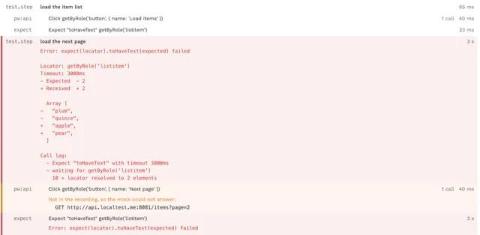
Your Playwright test clicks Next page, waits for the item list, and times out. Now you’re digging through a trace to find out whether the page broke or an API call failed. Traditional browser-testing workflows focus on clicks, page state and UI assertions. Those checks tell you whether a user journey works, but investigating a failure also means understanding the APIs behind the page.

Unified API Inventory reduces the time to patch with cross-source correlation

Cross-source API correlation connects runtime findings to their code, documentation, and fixes for improved defense against machine-speed attacks. It's late on a Thursday, and a runtime alert fires on POST /api/v2/payments in production. The finding is clear. What happens next is not. In fact, it creates a host of questions to be answered: Every AppSec team knows this hunt. And every day spent hunting for the right repo and owner is a day the attacker can still exploit a vulnerability.