October Launch Notes: Tech Leaders' Panel, spike protection, and more
Raygun’s Launch Notes are your regular round-up of all the improvements we made to Raygun last month — from significant features to performance updates.


Today, we are proud to announce that InfluxDB Open Source 2.0 is now generally available for everyone. It’s been a long road, and we couldn’t have done it without the amazing support and contributions of our community. This marks a new era for the InfluxDB platform, but it truly is just the beginning. Before we talk about the future, let’s take a look at some of the amazing new capabilities our team has been working on.
SAN FRANCISCO — November 10, 2020 — InfluxData, creator of the time series database InfluxDB, today announced the general availability of the next-generation open source platform for time series data, InfluxDB 2.0. Developers can now ingest, query, store and visualize time series data in a single unified platform, leverage new tools and integrations, and use familiar skills — making it faster and easier than ever to develop and deploy modern time-based applications.
To improve front-end performance in your application, it’s important to understand what kind of problems users are experiencing. They may be encountering slow load times, seeing unexpected shifts, or having trouble interacting with UI components. The question is, how bad is it? Is it perpetual-rage-click bad? Is it ditch-your-app bad? Is it rant-on-Twitter bad?
To us, dogfooding means using Sentry to improve Sentry. Here in this article, you’ll see how we used Performance to improve our search infrastructure. Recently, we extended our performance monitoring solution support to PHP and Serverless. We’re bringing it to Ruby and Java + Springboot soon too. But as some of you may have noticed, there’s also a new view in Performance, Trends. Trends shows you the most improved and regressed transactions in relation to releases.
ManageEngine’s Log360 was recently honored with the CybersecAsia Award for the Best User and Entity Behavior Analytics software application. The award certifies the important role, and the innovative technology brought to the table by Log360 over the past two years. Elevated cybersecurity risks currently experienced by organizations have driven the sudden adoption of the cloud and increased workforce mobility.
On November 12, 2013, I gave the first public talk about InfluxDB titled: InfluxDB, an open source distributed time series database. In that talk I introduced InfluxDB and outlined what I meant when I talked about time series: specifically, it was any data that you might ask questions about over time.
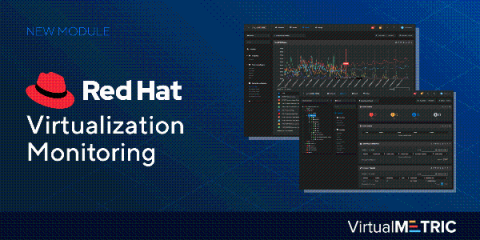
Monitoring your infrastructure is crucial for your applications, workloads and business as a whole. As a company, VirtualMetric believes that our solutions need to constantly evolve and follow your needs. Now we are happy to present the latest addition to your monitoring suite – Red Hat Virtualization Monitoring. Get advantage of agentless RHEV monitoring and tracking for your Red Hat virtual infrastructures.