
In case 2020 wasn’t dystopian enough, here’s some more unbelievable news. On July 15, 2020, social media giant Twitter admitted it fell victim to a security breach. The attackers targetted 130 Twitter accounts, including several belonging to high-profile individuals such as elected officials; former president Barack Obama; and business leaders including Bill Gates, Jeff Bezos, and Elon Musk.
In an unprecedented incident that has left medical authorities in Western Australia (WA) in disbelief, a local teenager has been found to be the mastermind behind a massive data breach. The breach intercepted thousands of names, phone numbers and communications between doctors responding to the COVID-19 crisis from their pagers. This is an unfortunate incident and a simple reminder of how pagers jeopardize the security of sensitive patient information.
The issue of unsecured databases is growing. In 2019, 17 percent of all data breaches were caused by human error — twice as many as just a year before. And the IBM/Ponemon 2019 report found that the estimated probability of a company having repeated data breaches within two years grew by 31 percent between 2014 and 2019. Why is this happening?
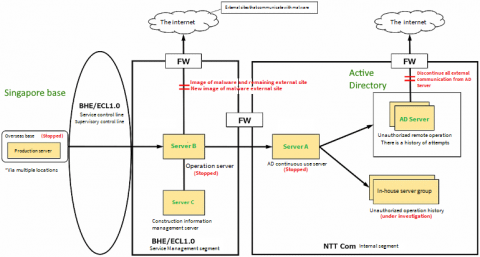
We’ve always been vocal about the imminent threat of breaches and propagated the message that irrespective of the size of your business, the industry you’re in, or your geography, you can be subject to a security breach. And unfortunately, history repeats itself often. On May 11, 2020, Nippon Telegraph & Telephone (NTT), a large telecommunications company, revealed that attackers may have stolen data from its internal systems, affecting over 600 customers.
What is Lateral Movement? Lateral movement refers to the techniques that a cyber-attacker uses, after gaining initial access, to move deeper into a network in search of sensitive data and other high-value assets. Lateral movement techniques are widely used in sophisticated cyber-attacks such as advanced persistent threats (APTs).
Email-based attacks can take many forms, and are typically deployed by cybercriminals in order to extort ransom or leak sensitive data. Just recently, a banking Trojan named Trickbot targeted Italy, a hotspot for COVID-19 cases, with email spam campaigns. While the email subject line is in line with the daily concerns and talks about spread of the virus, the attachment was actually a malicious script.
While the Capital One breach may have been jaw-dropping in its sheer scale, there are best practice lessons to be learned in its remediation response, says Nick Carstensen, technical product evangelist at Graylog.