Connecting Apache Kafka and Aiven for ClickHouse
Aiven for Clickhouse® Learn how to perform analytics with fast response time over huge volumes of data without the need to downsample data.


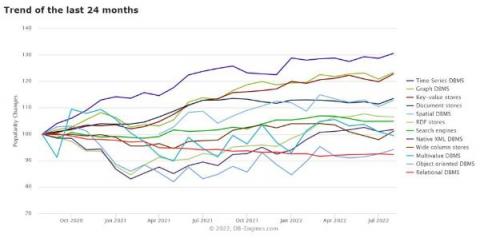
Databases are often the biggest bottleneck when it comes to application performance. Over the years a number of new database designs have emerged to help with not only basic scalability and performance but also to help improve developer productivity and make building certain types of applications easier. That isn’t to say these new databases are magical — there are always trade-offs being made and certain things are sacrificed for gains in other areas.
Public cloud can deliver significant business value across infrastructure cost savings, team productivity, service elasticity, and DevOps agility. Yet, up to 70% of organizations are regularly overshooting their cloud budgets, minimizing the gap between cloud costs and the revenue cloud investments can drive.
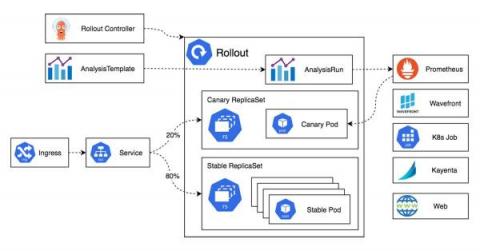
In an ideal world, developers would be able to release new products and features from development environments into production extremely fast while also not having to stress about breaking prod. Achieving this combination of development speed while also maintaining software reliability requires having the right toolchain and automation in place.
Cloud cost anomalies are unpredicted variations (typically increases) in cloud spending that are larger than expected based on historical patterns. Misconfiguration, unused resources, malicious activity or overambitious projects are some of the reasons for unexpected anomalies in cloud costs. Even the smallest of incidents can add up over time leading to cost overruns and bill shock.
When it comes to IoT data, MQTT is a superstar. With so many IoT devices generating data out in the world, developers need ways to access it. After all, data lies at the heart of every application. But data doesn’t just magically manifest itself into your datastore, and building the right data pipeline can make or break an application. Data collection is not a one-size-fits-all problem to solve.