Operations | Monitoring | ITSM | DevOps | Cloud

AI Economics Pulse: Your AI line item is winning, but is it working?

This edition of the Pulse is shifting lanes. We’re calling it the AI Economics Pulse now, because the question on every finance leader’s mind is whether AI spend and the returns on it can be made to pair at all. That question came to a head over the last few weeks. The bills came due, and they came due in public. Uber burned through its entire 2026 AI budget in four months and capped employee spending on Claude Code and Cursor at $1,500 a month.

Shipped: The AI spend on your team's laptops is the part you can't see.

Your engineers run Claude Code. Your designers are in Cowork. Half the company has Claude open in a browser tab, and a few are on Cursor. It’s on their laptops, each person authenticated a different way, and none of it touches your gateway. The only record you get is one lump-sum bill at the end of the month. Now you can capture it where it happens – on the laptop.

Claude Code alternatives in 2026: 10 AI coding tools compared on cost, features, and AI ROI

Something unusual happened in the first half of 2026: the most productive AI coding tool on the market became the most financially dangerous. And the companies that discovered this the hard way read like a Fortune 50 roll call.

Shipped: Counting tokens isn't enough. Start connecting them to outcomes.

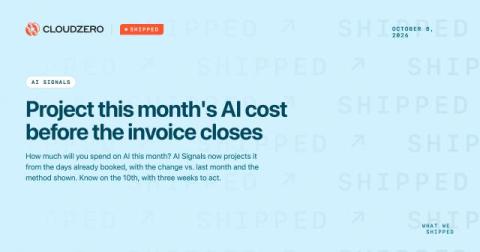
You’re funding AI across four billing relationships – Anthropic direct, OpenAI, Claude through Bedrock, Claude through Vertex – and the spend climbs every month. When your CEO asks what it’s producing, you have a number and no answer. Not which product it built, which customer it served, or which bet it’s paying off. And you’re being asked to approve more of it.

Shipped: Keep your cost allocation logic out of the wrong hands

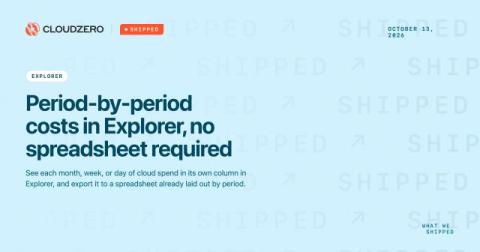
CostFormation is how your organization models cost allocation. As more teams adopt it, protecting that logic matters. RBAC for CostFormation Namespaces lets you scope access at the namespace level, so the right people can view and edit Dimensions, and everyone else can’t.

CloudZero AI Hub: The nexus of autonomous AI cost control

CloudZero originated as a way to make sense of your cloud costs. Costs spread across bills with billions of line items belonging to resources that might or might not have been tagged (or taggable), spun up by engineers working across teams, on different microservices, features, and products, that served a wide range of customers. Kubernetes. Multi-cloud. Check, check, check.

AI ROI: How to measure and provide the return on AI investments in 2026

Every quarter, the same scene plays out in boardrooms across the Fortune 500. The CEO asks: “What is the return on everything the company is spending on AI?” The CTO talks about productivity gains and developer velocity. The CFO points at a cloud bill that doubled but cannot isolate which line items are AI. The board nods politely and tables the discussion until next quarter, when the same question will produce the same non-answer. (If this sounds familiar, you are not alone. Keep reading.)

Claude Opus 4.8: Pricing, benchmarks, and which model to actually run

Anthropic shipped Claude Opus 4.8 on May 28, 2026, exactly 41 days after Opus 4.7. The SERP was empty for two days after launch. Not because nobody cared. Because engineering managers and finance teams were doing the math on whether the bill changes.