The latest News and Information on APIs, Mobile, AI, Machine Learning, IoT, Open Source and more!
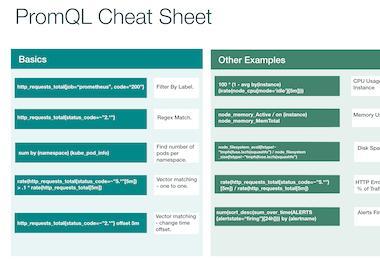
PromQL is the dedicated query language for the metrics and monitoring Stack known as Prometheus. PromQL is well know for having a steep learning curve. Because of this we've created a helpful cheat sheet as a reference to help you with understanding the most common PromQL queries. Please feel free to save the sheet below and share it with any team members that you think would appreciate learning some of the most important queries of PromQL.
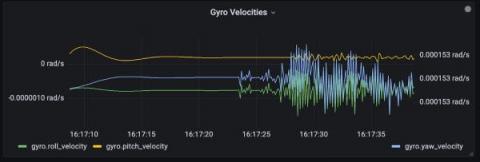
The number of internet-connected assets around us that are powering services and utilities in a wide array of sectors is rising at an exponential rate. As a result, it’s becoming critical for businesses that provide such services and utilities to have an observability stack tailored to the type of physical hardware devices that are generally deployed in swarms.
I am excited to share that we’ve just launched our first open source project called ValidKube. The idea behind Validkube is to fuse together the capabilities of three other popular open-source projects (kubeval, kubectl-neat and trivy by Aqua) and present them in a single view, providing users with a way to ensure YAML code hygiene and security, all at the same time and with just a few clicks of the button.
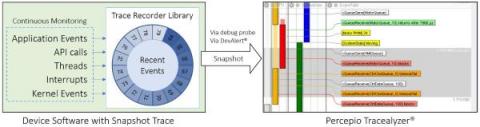
Percepio®, the leader in visual trace diagnostics for embedded systems and the Internet of Things (IoT), today released Tracealyzer 4.6 with official support for Zephyr RTOS and Microsoft Azure RTOS ThreadX. The new release also includes Percepio’s next generation trace recorder library with improved support for snapshot trace.
In cases, when a crash happens in your Android application, you want more context on what occured before the issue — kind of like following breadcrumbs to the exception. Our SDKs automatically report breadcrumbs for activity lifecycle events, system events, HTTP requests, and many more. Now, Android developers will also see UI events listed as breadcrumbs and get the full picture of what happened without ever having to recreate the issue.
Today, anyone can contribute to some of the world’s most important software platforms and frameworks, such as Kubernetes, the Linux kernel or Python. They can do this because these platforms are open source, meaning they are collaboratively developed by global communities. What if we applied the same principles of democratization and free access to cybersecurity?
Many logging solutions are available on the market to deal with log data, each focusing on a different part of the logging issue including log aggregation. These solutions are open-source and proprietary software and tools incorporated into cloud provider platforms, as well as a variety of capabilities to fulfill your requirements. Grafana Loki is a new industry solution, so let's take a closer look at what it is, where it originated from, and whether it can suit your logging requirements.
On Nov 13, 2019 Github made it’s CI/CD solution GitHub Actions generally available to the world. Since then tens of thousands of shared workflows have been published. It is now the default for most Github projects given how easy it is to integrate with an existing repo. Projects of all sizes have adopted it from our homegrown Terraform module to the Docker Cli. This is why at Speedscale we’ve published a template for how to use Speedscale in conjunction with GitHub Actions.