Operations | Monitoring | ITSM | DevOps | Cloud

The latest News and Information on CyberSecurity for Applications, Services and Infrastructure, and related technologies.

Automated Threat Intelligence Enrichment: An Overview

Discovering security threats is good and well. But, in many cases, simply knowing that a threat may exist is not enough. Instead, you also need threat intelligence enrichment. Threat enrichment plays a critical role in helping to evaluate and contextualize threats, root out false positives and gain the insights necessary to mitigate risks as efficiently and quickly as possible.

What Is a Secure SDLC?

The Software Development Lifecycle (SDLC) framework defines the entire process required to plan, design, build, release, maintain and update software applications, including the final stages of replacing and decommissioning an application when needed. A Secure SDLC (SSDC) builds on this process, integrating security at all stages of the lifecycle. When migrating to DevSecOps (collaboration between Development, Security, and Operations teams), teams typically implement an SSDLC.

Processes, forks and executions - part 1

While working on the integration of CFEngine Build into Mission Portal we came to the point where we needed to start executing separate tools from our recently added daemon - cf-reactor. Although it may seem like nothing special, knowing a bit about the process creation and program execution specifics (and having to fight some really hard to solve bugs in the past) we spent a lot of time and effort on this step.

Optimizing Security and Digital Experiences: Why User Experience Monitoring is Key

For just about any organization, there’s a balance that has to be struck between absolute security and absolute convenience. Seemingly, every new innovation that increases convenience also introduces new risks. On the other hand, every safeguard instituted can also create complexity, delays, or in some other way diminish the user experience. Either way, businesses are exposed, whether to the catastrophic consequences of breaches, or of an erosion of user productivity and customer retention.

How to develop a successful threat-hunting program

According to the 2021 Cost of Data Breach report, the average attack “dwell time”—the period between an attacker’s breach of an organization’s network and the point at which the organization finds out about it—is 287 days. During this time, the attacker can stealthily look to gather valuable information to steal or compromise data, incurring huge costs for affected companies.

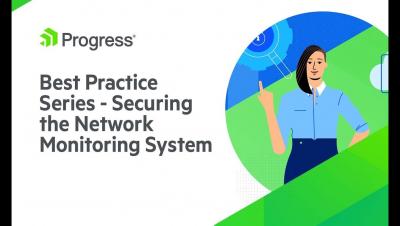
Best Practice Series: Securing the Monitoring System

Network security makes the headlines at least once per day – and usually for the wrong reasons. In today's world, ensuring and maintaining a secure deployment is of utmost importance. Did you know that WhatsUp Gold provides several important security features that you can configure and manage to maintain a secure deployment? These features can help you to defend against unauthorized access to the WhatsUp Gold server as well as to devices monitored by WhatsUp Gold.

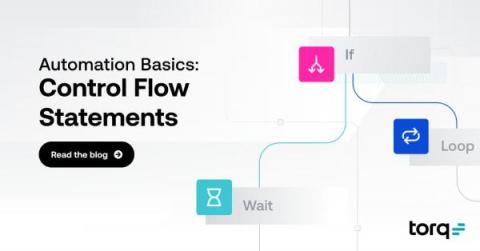
What Are Control Flow Statements?

Control flows are the backbone of automation. Identifying what to do with a set of data – and how – is a key component of high-value automation, but it can also be confusing to wrap your head around at first. What is a conditional? And what does it have to do with a loop? How do you deal with a set of information versus a single data point?