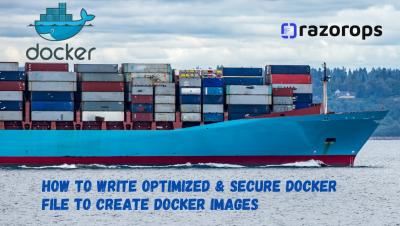
How to write optimized and secure docker file to create docker image.
Learn the simplest approach to Docker images and how to use them using a Docker repository, such as Docker Hub, or hosting your own private repository.


The latest News and Information on Continuous Integration and Development, and related technologies.
When you think of software testing, what comes up first? For many developers, unit tests and integration tests are often top of mind. Both software testing methods are vital to writing and maintaining a high-quality production codebase. But they are not sufficient on their own. Your team’s testing practice should assess the entire application, observe the larger story of how it operates when functioning correctly, and raise alarms when deviations are found.
The explosion of talent available for remote work (and the widespread acceptance of remote first employment) allows for global collaboration on an unprecedented scale.
As digital transformation accelerates and more organizations use software solutions to facilitate work operations, security threats have become more commonplace. Cybercriminals tirelessly develop ways to exploit software application vulnerabilities to target organizational networks. A notable example is the 2017 Equifax data breach, which exposed the personal details of 145 million Americans.
Modern software systems are complex, with services distributed across data centers, in many zones, all around the world. Gone are the days when we managed individual servers dedicated to our organization, comfortable with the knowledge of the unique quirks of our setup. Now we rely on others to manage massive data centers where we borrow small slices of virtual space on shared hardware, traveling over shared networks, all in a system we call the cloud.
Here on the CircleCI Insights team we don’t just develop stuff for CircleCI users, we are CircleCI users. Really, there’s no better way to get to know your product than to use it, and the Insights team is no exception. A few months ago, we realized that our pipeline configuration for the Insights UI left much to be desired.