Operations | Monitoring | ITSM | DevOps | Cloud

Five Ways to Use OpenTelemetry Beyond Observability

OpenTelemetry graduated from the CNCF in May 2026 as, in the foundation’s own words, the de facto observability standard. The JavaScript API package alone did 1.36 billion downloads in twelve months. That kind of win has a side effect nobody plans for. Once a wire format is everywhere, has a receiver for every source, a transform language, and an agent your platform team already operates, people start putting things on it that have nothing to do with knowing whether a service is healthy.

Grafana Tempo + Pyroscope: Profiles Traces (Sept 2026 Community Call )

Profiles + Traces and span redaction Can't comment in the chat? You may need to create a channel. Join us live for an introduction to flame graphs. We’ll cover what they are, how to read them, and how to use them to find performance bottlenecks in your applications. Bring your questions! Grafana Cloud is the easiest way to get started with Grafana dashboards, metrics, logs, traces, and profiles. Our forever-free tier includes access to 10k metrics, 50GB logs, 50GB traces and more.

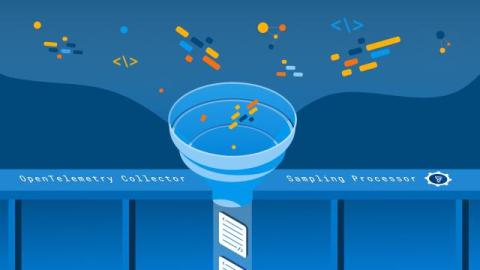
Bringing the Most Advanced Sampling to the OpenTelemetry Collector

Sampling is a core skill that everyone who runs an observability pipeline at scale will learn. There are lots of tradeoffs within the various decisions you'll make from reducing bandwidth, CPU, and memory, to reducing costs and making the observability backend's performance better for users. Historically, there have only been three mechanisms, each with their own tradeoffs: However, there is a secret fourth option: adaptive tail sampling—which changes those tradeoffs.

From traces to experiments: A loop for improving AI agents

Let’s say your team shipped a support agent last quarter. The launch demo went well, stakeholders were pleased, and everyone moved on. A few months later, things start to look off. Summaries of long conversations are truncated, and monitors show latency spikes on tool calls to the billing API. Your team’s first instinct is to ship fixes such as tweaking prompts or upgrading the model.