Operations | Monitoring | ITSM | DevOps | Cloud

Grafana 11.1 release: new visualization features, Grafana Alerting updates, and more

The Grafana 11.1 minor release comes on the heels of unveiling Grafana 11 at GrafanaCON, but it packs in some ease of use visualization improvements, updates to Grafana Alerting (I spy a new settings page), and some impactful changes to the overall accessibility of Grafana.

Grafana Cloud updates: new visualization options, performance test analysis, Grafana Alerting improvements, and more

We consistently roll out helpful updates and fun features in Grafana Cloud, our fully managed observability platform powered by the open source Grafana LGTM Stack (Loki for logs, Grafana for visualization, Tempo for traces, and Mimir for metrics). In case you missed it, here’s a roundup of the latest and greatest updates for Grafana Cloud this month. You can also read about all the features we add to Grafana Cloud in our What’s New in Grafana Cloud documentation.

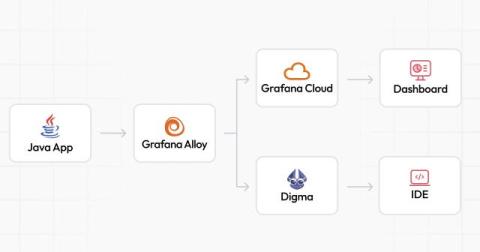
Shorten your feedback loop: Java observability with OpenTelemetry, Grafana Cloud, and Digma.ai

Ron Dover is CTO and co-founder of Digma.ai, an IDE plugin for code runtime AI analysis to help accelerate development in complex code bases. Ron is a big believer in evidence-based development and a proponent of continuous feedback in all aspects of software engineering. Traditionally, software developers have relied on simple logs to understand code execution and troubleshoot issues.

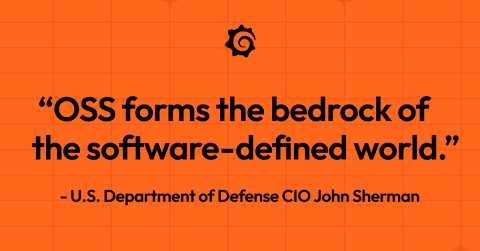
How the DoD is embracing OSS and DevSecOps modernization with Grafana

When it comes to observability, we believe open source will win in the end. It’s a sentiment shared by a wide spectrum of users, whether they work in auto manufacturing, banking, or shipping. The U.S. federal government is yet another industry to prove this, showing that even those operating under the strictest security and compliance requirements see OSS as their preferred approach.

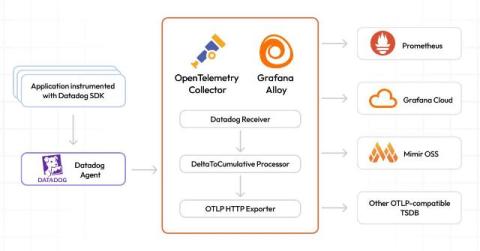
Translate Datadog metrics into OTLP with the OpenTelemetry Collector and Grafana Alloy

Today, we are excited to announce that we are releasing new code for the OpenTelemetry Datadog receiver as open source. This code allows users to translate Datadog metric formats into native OTLP format. These metrics can then be sent to any OpenTelemetry-compatible metrics system, whether it’s Prometheus, Grafana Mimir, or another backend database.

How to use OpenTelemetry resource attributes and Grafana Cloud Application Observability to accelerate root cause analysis

Let’s imagine a scenario: you use OpenTelemetry, and your observability backend runs on several hosts. You collect data on application latency, and notice a recent increase that you want to investigate. But how will you know which host caused the degradation? This is exactly where OpenTelmetry resources come in. In the context of OpenTelemetry, a resource represents the entity producing the telemetry data, such as a container, host, process, service, or operating system.

Introduction to Ingesting OpenTelemetry Logs with Loki | Zero to Hero: Loki | Grafana

Have you just discovered Grafana Loki and are planning to use OpenTelemetry as your instrumentation tool of choice? Or looking for an introduction to what OpenTelemetry is? In this Zero to Hero episode, we cover the basics of instrumenting your code with the Otel SDK, the Otel Collector and the new native Otel endpoint of Loki.

Curated dashboards in Honeybadger

Earlier this year, we introduced a new logging and performance monitoring tool, Honeybadger Insights. You can finally send your logs, application events, and telemetry data to Honeybadger! Once you do, you can query your logs and events to diagnose performance issues, perform root-cause analyses, and create beautiful charts and dashboards to see what's happening in real time.

How Dell successfully migrated to Grafana Cloud and consolidated its observability in the process

While some monitoring tools excel at a specific task, observability works best when you have a holistic view of your system. You need a platform capable of working with all of your telemetry collectively, otherwise you can end up with a complex, inefficient, and expensive collection of incongruent, siloed tools. That’s what one team at Dell Technologies realized before they made a switch to Grafana Cloud last year.

Anomaly detection and root cause analysis with Application Observability | Grafana Cloud

In this video, we walk you through the latest features of Grafana Cloud Application Observability, designed to accelerate anomaly detection and root cause analysis. Application Observability offers an out-of-the-box solution for monitoring applications and minimizing MTTR. It natively supports both OpenTelemetry and Prometheus and allows you to seamlessly unify application and infrastructure insights.

Improved anomaly detection and faster root cause analysis: the latest features in Grafana Cloud Application Observability

In recent years, “the biggest needs we’ve heard from our customers have been to make it easier to understand their observability data, to extend observability into the application layer, and to get deeper, contextualized analytics,” said Tom Wilkie, CTO of Grafana Labs, at ObservabilityCON 2023.

How CEOs Can Have a Bird's Eye View of Their Business While Traveling

The modern era is seeing businesses around the world become increasingly globalized. At the same time, given that remote work has become the norm, CEOs are finding themselves frequently on the move. According to European CEO, CEOs travel from 1 to 10 working days per month for business purposes. In fact, these top-level bosses spend more time traveling than in meetings.

Are dashboards dead? Not quite. They just haven't evolved

In discussions across the tech and data communities in recent years, a provocative idea has been gaining traction: the notion that dashboards are dead. The first time I came across this was in the article by Taylor Brownlow of the same name, "Dashboards are Dead". A worthwhile read. The article suggests that dashboards, as we known them, no longer serve the needs of modern data-driven organizations. Not through their own fault as such, more through misuse or over-asking.

Grafana update: Service account tokens are replacing API keys

Enhancing security and providing flexible access control has always been part of our core mission at Grafana. In line with those efforts, we made service accounts generally available in Grafana 9.1. Service accounts are essentially machines simulating Grafana users, and they are used to run automated workloads — for example, counting the number of data sources in Grafana every day or provisioning alerts using Terraform.

N-central Custom Dashboards: Step-by-Step Guide by Paul Kelly

Discover how to create custom dashboards in N-central with N-able Head Nerd Paul Kelly. In this tutorial, Paul walks you through the entire process, from setting up bespoke filters to displaying critical monitoring checks on your custom dashboards. Optimize your monitoring strategy and get real-time insights into your customer's environments. Whether you're tracking server issues, CPU usage, or disk health, this guide will help you set up dashboards tailored to your needs. Perfect for Managed Service Providers (MSPs) looking to enhance their N-central setup.
Mobile app observability with OpenTelemetry, Embrace, and Grafana Cloud

We are excited to announce an expansion of our partnership with Embrace to bring mobile observability to our users using open standards like OpenTelemetry. We first worked with Embrace last year when they created a plugin for Grafana that gives mobile teams an easy way to visualize and analyze real-time mobile metrics directly in a Grafana dashboard.
How to Scale and Standardize Observability Practices: Hear from Canva and Atlassian | Grafana

This panel discussion, featuring Jenna, Director of Engineering, Reliability Platforms at Canva and Andrew, Head of Engineering at Atlassian, explored the challenges and strategies of implementing standardization in large tech companies. Atlassian, known for its software development and collaboration tools, initially faced resistance to standardization but shifted as inefficiencies and compliance issues emerged. Canva, a graphic design platform, highlighted the balance between flexibility and standardization, using observability tools for accountability.

The Top 10 Web Analytics Dashboard Examples

Web analytics dashboards are essential tools for businesses looking to enhance their online presence, optimize user experience, and achieve their wider business objectives. By supplying actionable insights and facilitating data-driven decision-making, these dashboards help businesses stay competitive in today's digital landscape.

How to Scale Observability with Grafana, Tempo, Loki, and Prometheus | Dojo | Grafana

In this talk, Roberto, a staff engineer at Dojo, outlines the company's journey toward achieving advanced observability, which has been crucial for their reliability efforts over the past three years. Dojo, a payments provider in the UK, has focused on evolving their observability practices, initially starting with basic monitoring and progressing towards comprehensive observability, encompassing metrics, traces, and logs.

Scaling Monitoring & Observability for a Software Platform with Grafana Cloud | Builder.ai | Grafana

In this talk, Utsav and James from Builder.ai discuss their journey in scaling their composable software platform. Builder.ai empowers users, from entrepreneurs to enterprises, to build and innovate without dealing with technical complexities. The focus of the talk is on their Developer Service platform and the integration of Grafana Cloud for monitoring and observability.

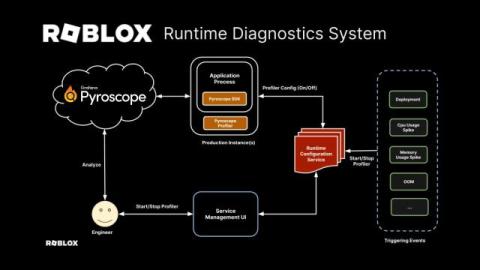
Streamlining runtime diagnostics with on-demand profiling: Inside Roblox's observability stack

Each day, more than 70 million active users sign into Roblox to create, play, and interact with each other through virtual experiences. And regardless of what those experiences are, exactly — adopting a pet, completing an obstacle course, or fulfilling orders at a virtual pizza parlor — the Roblox observability team is dedicated to making them seamless.

How to Deploy Grafana on Kubernetes Using Helm | Grafana | Tutorial

How to deploy Grafana on Kubernetes using Helm Charts, customize the default configurations from values.yaml and also debug the logs? Join Senior Developer Advocate Syed Usman Ahmad in this complete hands-on tutorial and learn to easily deploy Grafana into a Kubernetes namespace via Helm charts.

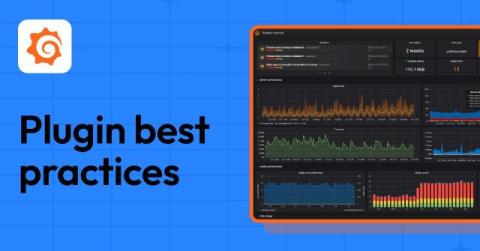
6 tips to improve your Grafana plugin before you publish

Whether they help you tap into external data sources or add a new visualization type to your dashboard, plugins are a powerful way to customize and extend the value of Grafana. There’s a rich (and constantly evolving) ecosystem of Grafana plugins you can choose from today. While some of these plugins are created and maintained by the Grafana Labs team, many of them are contributed by our commercial partners and community members.

Snowflake data visualization: all the latest features to monitor metrics, enhance security, and more

In 2020, we introduced the Snowflake Enterprise data source plugin for Grafana, allowing users to seamlessly pull data from the Snowflake cloud-based data storage and analytics service into Grafana dashboards. Available for Grafana Enterprise and Grafana Cloud users, it’s a powerful way to not only query and visualize Snowlake data, but to do so alongside other data sources, so you can discover correlations and other meaningful insights within minutes.

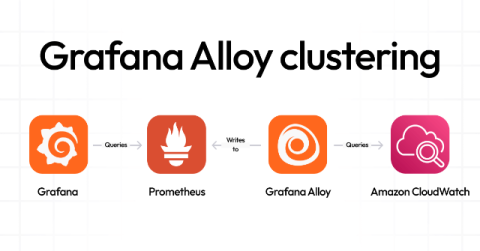
How we use Grafana Alloy clustering to scrape nearly 20M Prometheus metrics

If you are interested in running your own Grafana Alloy cluster for high availability or horizontal scalability, then you’re in the right place. That’s because we’ve already done it with our own agentless exporters system, which allows you to scrape data from providers such as Amazon CloudWatch, without running any applications on your own infrastructure.

5 useful transformations you should know to get the most out of Grafana

I’ve been a user of Grafana OSS for seven years, starting with Grafana 5.0. My, how things have evolved since then. The first time I used Grafana was to monitor a Kafka data pipeline with a bunch of Java Spring Boot microservices and Prometheus to extract metrics. I was amazed how much you could do with Grafana and Prometheus together, and so I always kept Grafana on my short list of places I wanted to put my energy, either as a contributor or by working directly for the company.

Build Dashboards for Monitoring the Remote Workforce

Remote workforce management is driving the business landscape, requiring cloud-based tools for monitoring to maintain productivity and user satisfaction. Real-User Monitoring (RUM) and synthetic transaction monitoring are powerful tools that enable organizations to diagnose and fix network issues faster for their employees wherever they work.

The Leading Analytics Dashboard Examples

You're mostly likely already tracking numerous business critical metrics but you may not be aware of how to make this process quicker and simpler. Analytics dashboards are graphical user interfaces (GUIs) that offer visual representations of data collected from multiple sources, such as databases, websites, applications, or other data repositories. These dashboards can make it much easier to derive insights from your analysis compared to examining numbers and metrics.

Grafana Tempo 2.5 release: vParquet4, streaming endpoints, and more metrics

Grafana Tempo 2.5 is here with performance improvements, vParquet4 laying the groundwork for new TraceQL features, and additional metrics capabilities! Watch the video above for a highlight of TraceQL metrics, or continue reading to get a quick overview of the latest updates in Tempo. If you’re looking for something more in-depth, don’t hesitate to jump into the Grafana Tempo 2.5 release notes or the changelog.