Operations | Monitoring | ITSM | DevOps | Cloud

Sponsored Post

Your Observability Stack Found the Fire. Congratulations.

The dashboards are red, the alerts are firing, and Slack has officially become a war room. Someone has asked, "Anyone else seeing this?" and 14 people have immediately responded with screenshots. Welcome to another day in distributed systems. The recent GitHub outage is a great reminder of how complicated modern applications have become. Services talk to services, infrastructure scales up and down, retries multiply traffic, and dependencies behave in ways nobody expected. Thankfully, we have observability.

1,238 API errors in two days, and every response said 200 OK

The query count in our snapshot drawer went blank, and the unit test for that request kept passing. When we went looking in recorded traffic, the API gateway had rejected that request 210 times in a single recording. Every one of those rejections came back as 200 OK. So we searched the rest. We record our own API gateway with Speedscale, and two recording windows from November 3 to 5 (about 38 hours between them) held 1,238 responses with gRPC status INVALID_ARGUMENT. All 1,238 returned HTTP 200.

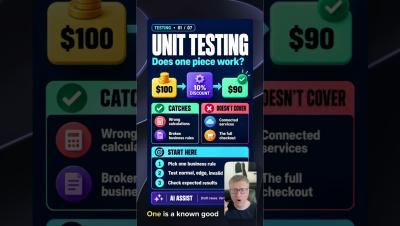
The Truth About End-to-End Testing Explained #softwaretesting #endtoendtesting #devops #qualitytest

End-to-end (E2E) testing brings your entire system together in a staging or UAT environment to test real user paths and ensure core functions work as expected. However, because E2E tests are non-comprehensive and miss edge cases, they must be combined with other testing methodologies. Learn more: speedscale.com.

How to Use Automatic Release Readiness Scorecards

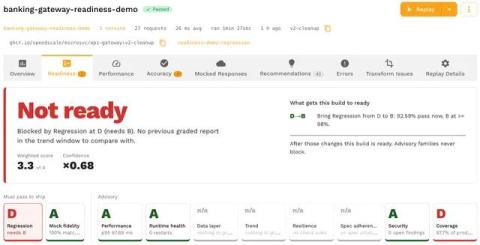
This guide uses Speedscale’s readiness scorecard to compare three builds of a Spring Cloud Gateway service on Kubernetes. It covers a regression that still meets the test’s pass-rate goal, a GET-only retry evaluated under injected dependency failures, and a CI check that requires a Ready verdict. The example uses api-gateway from the banking demo’s readiness-demo branch. The three image tags identify distinct builds.

Automatic Release Readiness Scorecards

Speedscale’s automatic release readiness scorecard grades a completed replay against the release rules in its test configuration. It returns a Ready or Not ready verdict, letter grades for ten metric families, a weighted score and a confidence factor. This feature provides a concrete and automatic baseline for whether new releases are ready for production. The underlying test runs recorded traffic against a build, with dependencies mocked from the recording.

Playwright End-to-End Testing with Recorded API Mocks

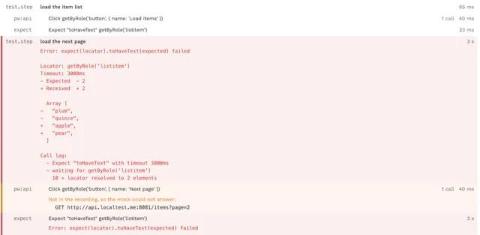
Your Playwright test clicks Next page, waits for the item list, and times out. Now you’re digging through a trace to find out whether the page broke or an API call failed. Traditional browser-testing workflows focus on clicks, page state and UI assertions. Those checks tell you whether a user journey works, but investigating a failure also means understanding the APIs behind the page.