Operations | Monitoring | ITSM | DevOps | Cloud

The latest News and Information on Log Management, Log Analytics and related technologies.

Petabyte Scale, Gigabyte Costs: Mezmo's Evolution from ElasticSearch to Quickwit

At Mezmo, we handle an enormous volume of telemetry data for our customers and ourselves, requiring a robust and efficient search and analytics backend. For years, ElasticSearch served us well, but as our infrastructure grew to a multi-cluster, multi-petabyte scale, we started to see the cracks—rising costs, performance bottlenecks, and scalability concerns. We needed a change, one that would make our system more cost-effective while maintaining speed and reliability.
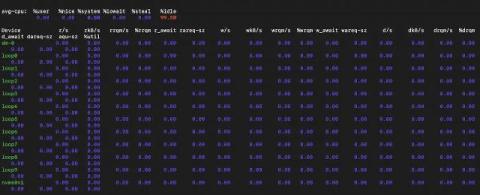
Full Guide to Linux Disk IO Monitoring, Alerting and Tuning

Disk IO (Input/Output) is a core aspect of system performance. Whether you’re managing a database, a web application, or a cloud server, how efficiently your system reads and writes data affects everything from response times to stability. Unlike high CPU usage or memory bottlenecks that often manifest immediately, disk IO issues tend to creep up silently—until they slow down critical processes.

How to Stop Memory Leaks Before they Crash Your Linux System

Imagine you’ve got a leaky faucet in your kitchen. At first, it’s just a drip here and there—annoying, sure, but not enough to ruin your day. But leave it unchecked, and soon that drip turns into a steady trickle. Your water bill skyrockets, the sink overflows, and before you know it, you’re ankle-deep in chaos. Now, replace that faucet with a Linux system, and you’ve got a memory leak.

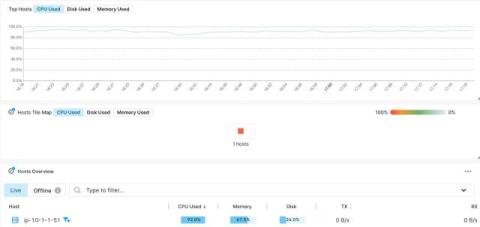
5 Ways to Prevent CPU Overload on Linux Servers

Every server administrator’s nightmare starts with a message: “CPU usage at 100%” It’s that critical moment when your Linux server transforms from a reliable workhorse into a sluggish mess, taking your applications and user experience down. We’ve all been there… staring at a terminal, watching load averages climb, while frantically trying to figure out which process decided to throw a CPU-hungry party on our server.

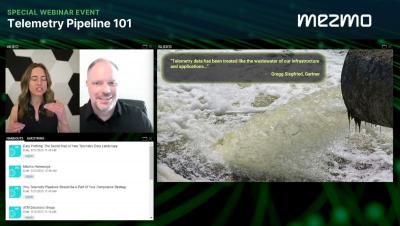
Telemetry Pipeline 101

Are you looking to enhance your observability and gain deeper insights into your systems? Curious about how a Telemetry Pipeline can revolutionize your monitoring and troubleshooting capabilities while keeping the cost low? Join Mezmo’s Bill Balnave (Vice President of Technical Services) for an insightful webinar unraveling Telemetry Pipeline’s key concepts, highlighting its significance in modern software development and operations. Discover how a Telemetry Pipeline enables you to collect, profile, transform, and analyze crucial telemetry data from your applications and infrastructure.

SSHD Logs 101: Configuration, Security, and Troubleshooting Scenarios

Secure Shell (SSH) is a fundamental tool for remote system administration, and its logs play a critical role in security monitoring, debugging, and compliance. SSHD logs provide insights into authentication attempts, connection successes, failures, and potential intrusions. This guide explores everything you need to know about SSHD logs, including their location, format, analysis, and lesser-known security practices to maximize their effectiveness.

Resolving Heroku deployment issues using comprehensive log data

Deploying applications on Heroku offers a streamlined process for developers, but even the most well-optimized setups can encounter deployment issues. To effectively resolve these issues, it's crucial to gain real-time insights into your app’s behavior, traffic, and performance metrics. The solution to resolving Heroku deployment challenges lies in leveraging the power of log management.

Kubernetes 101

When you get behind the wheel of your car, one of the first things you see is the dashboard. Your dashboard provides various information about all the different technologies that make the car run smoothly, like helping you control your speed, providing insight into your fuel levels, and offering suggestions for regular maintenance, like oil changes. For developers, Kubernetes acts as that one-glance dashboard to provide insights about container performance, maintenance needs, and storage requirements.

The Basics of Log Parsing (Without the Jargon)

Logs are crucial for understanding what's happening in your system, but they can often be hard to make sense of. Log parsing is the key to turning raw, unstructured data into something useful. In this blog, we'll explore the basics of log parsing, its importance, and how it helps you extract valuable insights from your logs without all the clutter.