Operations | Monitoring | ITSM | DevOps | Cloud

The latest News and Information on Containers, Kubernetes, Docker and related technologies.

How Grafana Labs uses and contributes to OpenCost, the open source project for real-time cost monitoring in Kubernetes

While more and more teams are adopting Kubernetes as their standard container orchestration technology, cost insight is lacking. Teams often don’t know how much they’re spending, where in their organization they are spending, or what is driving their infrastructure cost increases. OpenCost helps alleviate this problem by bringing real-time cost monitoring to Kubernetes workloads with a solution that encompasses both an open specification and an open source project.

Helm-Dashboard Crosses 3K Stars As v. 1.0.0 Released

Our latest open-source project, Helm-Dashboard, just crossed 3K stars on GitHub (and hundreds of daily active users), only three months since it was released! We thought this milestone was a good chance to take a look back at our journey, announce the release of v. 1.0.0, discuss future plans, and, most importantly, give our utmost thanks to the amazing contributors and Kommunity members that made it all possible! What capabilities would you like to see next in Helm-Dashbaord?

How To Simplify Your Kubernetes Adoption Using Rancher

Kubernetes has firmly established itself as the leading choice for container orchestration thanks to its robust ecosystem and flexibility, allowing users to scale their workloads easily. However, the complexity of Kubernetes can make it challenging to set up and may pose a significant barrier for organizations looking to adopt cloud native technology and containers as part of their modernization efforts.

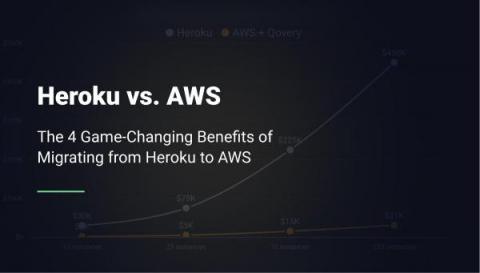
The 4 Game-Changing Benefits of Migrating from Heroku to AWS

Hi there! If you're in the tech world, you've probably heard about the trend of companies moving from Heroku to AWS. At Qovery, we've seen an increasing demand from companies looking to make this move. And for good reasons! Here are the top 4 reasons why companies are choosing AWS over Heroku.

Kubernetes network monitoring: What is it, and why do you need it?

In this article, we will dive into Kubernetes network monitoring and metrics, examining these concepts in detail and exploring how metrics in an application can be transformed into tangible, human-readable reports. The article will also include a step-by-step tutorial on how to enable Calico’s integration with Prometheus, a free and open-source CNCF project created for monitoring the cloud.

3 Key Questions to Ask Before Getting Started with Kubernetes

If you need to deploy a lot of microservices at once and manage them at scale, Kubernetes is hard to beat. But Kubernetes also brings additional complexity that you just might not need. You would be smart to ask yourself these three questions before getting started with Kubernetes.

A beginner's guide to Kubernetes application monitoring

Application performance monitoring (APM) involves a mix of tools and practices to track specific performance metrics. Engineers use APM to monitor and maintain the health of their applications and ensure a better user experience. This is crucial to high quality architecture, development, and operations, but it can be difficult to achieve in Kubernetes since the container orchestration system doesn’t provide an easy way to monitor application data like it does for other cluster components.

How to Get Full Kubernetes Observability in Minutes

How is your organization handling Kubernetes observability? What tools are you using to monitor Kubernetes? Is it a time-consuming, manual process to collect, store and visualize your logging, metrics and tracing data? And, what are you actually getting out of all that investment? At Logz.io we’re trying to make this process easier for customers who are serious about Kubernetes observability. We’ve made significant investments in this area for Kubernetes use cases.

Use library injection to auto-instrument and trace your Kubernetes applications with Datadog APM

Many organizations rely on distributed tracing in Datadog APM to gain end-to-end visibility into the performance of their Kubernetes applications. But as teams grow, it can become impractical for them to manually configure each new application with the libraries and environment variables needed for tracing.