Operations | Monitoring | ITSM | DevOps | Cloud

The latest News and Information on Cloud monitoring, security and related technologies.

Exploring the Role of Technology in Hospital Temperature Management

In the realm of healthcare, maintaining optimal environmental conditions within hospital premises is crucial for patient recovery, the preservation of medicines, and the operation of medical equipment. Among these conditions, temperature management stands out as a fundamental aspect that directly influences the health outcomes of patients and the efficacy of medical procedures. With advancements in technology, hospitals have adopted innovative solutions for precise temperature control, leading to significant improvements in patient care and operational efficiency.

Decoding SaaS Customer Cost: A Guide to Calculating Cost per Customer in Azure

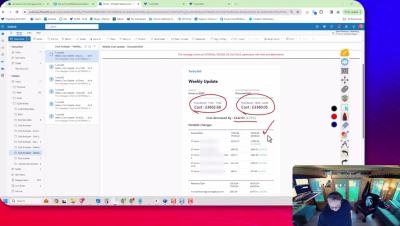
In the SaaS era, especially in the B2B segment, the business’s profitability will vary from customer to customer. It is usual to observe that there would be a few “expensive customers” who use the platform heavily, which could also mean they are profitable customers. But we cannot take plain guesses! As a business, ensuring that the revenue we receive from each customer is appropriate for what it costs us to deliver the value is significant.

Implementing OpenTelemetry OTLP in .Net

The.NET framework is a powerful platform for creating various applications, from web-based services to comprehensive enterprise solutions. Its extensive libraries, support for multiple programming languages, and powerful development tools enable the creation of high-performance, scalable applications that can be customized to suit various needs. This framework continuously evolves to meet the demands of modern software development with a complete ecosystem of add-ons created by an enthusiastic community.

Modernize as You Migrate Series: 05 - Discovering Your Servers with Ease Using Nmap to Fill Gaps

This episode discusses using Nmap for network-based discovery to fill server inventory gaps in data centers. The integration with Tidal Accelerator allows for quick scans and discovery of servers and devices, providing peace of mind for data center closure and migration programs.

The pendulum swings back: colocation as a cost control strategy

The evolution of public cloud over the past few years has been remarkable. Digital transformation, remote work, and AI have created breakneck growth. Back in 2018, before anyone uttered the words COVID or ChatGPT, there were already big drivers for public cloud. The global digital transformation market size was valued at $320 billion, and set for 18% annual growth, to reach a projected $695 billion by 2025.

AIOps as a Service for MSPs: What to Look For

AIOps is a game changer for MSPs. But how do you implement AIOps to ensure you get those game-changing benefits? Chances are, you’re not interested in spending the resources and time required to build it yourself with all of the development, testing, maintenance, etc. that entails. Instead, AIOps as a service provides you with the capabilities to better manage the IT infrastructure and operations of multiple clients.

How to Propagate OpenTelemetry Trace Headers Over AWS Kinesis: Part 2

In the first article of our series, we explored the importance of trace headers and the complexities involved in their propagation. Now, we shift from theory to practice. This second installment will take you through a hands-on baseline scenario and our initial strategy of propagating the OpenTelemetry trace context in AWS Kinesis by using the PartitionKey parameter.

SaaS, PaaS & IaaS: The Ultimate Guide To Cloud Service Models

The emergence of cloud computing. Arguably the biggest change in technology in decades, cloud computing changed how technology would now develop and how businesses and organizations would operate. Indeed, the enormous popularity of cloud services is due precisely to that: you can get different models depending on your operational needs. To properly utilize these cloud service models, you should understand the differences in their functional capabilities and the ideal use cases for each model.