Operations | Monitoring | ITSM | DevOps | Cloud

The latest News and Information on Continuous Integration and Development, and related technologies.

AI DevOps in 2026: How AI Coding Tools Are Breaking Your CI/CD Pipeline (and How to Fix It)

AI coding tools turned every engineer into a 10x developer. Now your CI/CD pipeline is the bottleneck. Learn how to handle 10x more deploys per engineer with Qovery's dual deployment model. Romaric founded Qovery to make Kubernetes accessible to every engineering team. He writes about platform strategy, developer experience, and the future of cloud infrastructure.
Getting started with Codex and CircleCI

Codex is OpenAI’s coding agent, powered by the GPT-5 family of models. It reads your files, proposes edits, and runs commands directly in your local environment. It ships as both a desktop app and an open source CLI, and it extends through plugins that connect it to external tools and services. Like any AI coding tool, Codex is strongest when the code it generates gets validated automatically.
Sponsored Post

The SDLC: phases, popular models, benefits & more

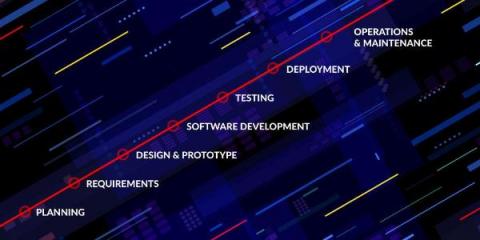
The Software Development Life Cycle (SDLC) describes the process we follow to deliver software to customers. It captures each step of creating software, from ideation to delivery and eventually to maintenance. In this post, we've broken down everything you need to understand the SDLC.

Three Architectural Principles for Mythos & GPT-Cyber Readiness

Since Anthropic announced Project Glasswing and the capabilities of Claude Mythos Preview, and OpenAI announced GPT-Cyber – my calendar has looked the same every day: Back-to-back calls with CISOs, AppSec leads, and security architects. And every call starts with the same question.

How to Improve Your Documentation with AI (CircleCI Chunk Tutorial)

AI coding assistants help you ship features fast, but documentation almost never keeps up. In this Ship Smarter session, we'll show you how CircleCI's Chunk autonomous CI/CD agent automatically analyzes your codebase, identifies documentation gaps, and opens a pull request with improvements. No manual writing required. In this video.

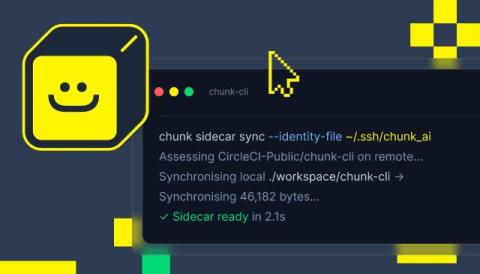
Introducing Chunk sidecars: Inner loop validation that keeps up with your agents

Local development and remote validation were always meant to work together: developers iterate on their machine, run a few manual checks, then push to CI to clear code for production. But AI development broke that balance, flooding CI with a volume of commits no developer has read, let alone tested. Chunk sidecars restore the balance: lightweight, preconfigured environments that run alongside your local workflow and validate changes as they happen.

Inside Atlassian's Merge Queues: How we ship faster with fewer incidents

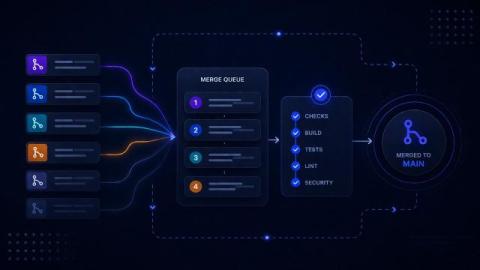
At Atlassian, we use Merge Queues to ship frequent changes with confidence and streamline pull request merges. Across some of our busiest codebases, Merge Queues have sharply reduced incident frequency and turned merging from a stressful bottleneck into a background task. Today, most of our largest repositories rely on Merge Queues—over 70 large repos across products like Jira, Rovo, Trello, and others—having safely landed 30,000 pull requests since adopting Merge Queues Beta last quarter.