Operations | Monitoring | ITSM | DevOps | Cloud

Improvise your Operational Readiness Testing (ORT) with Harness

Most Operational Readiness Testing (ORT) programs follow the same ritual. A checklist gets filled out. Someone runs a load test in a war room the week before launch. A failover drill gets scheduled, and everyone hopes it goes cleanly. Then the release is shipped and testing is done. But with Harness you can make this process continuous and your services resilience is protected with the same ORT check list with every small change that is happening in your SDLC.

Microsoft Took 8 Months to Fix This Copilot Vulnerability

Microsoft finally patched a critical Copilot vulnerability nearly eight months after researchers first disclosed it — and the way the attack worked raises some unsettling questions about AI memory. The vulnerability chained together multiple flaws that could allow a malicious prompt hidden inside a webpage to be pulled into Copilot simply by asking it to summarize the page. From there, the attack could potentially access connected data from services like Gmail, Google Drive, and Google Calendar and exfiltrate that information using Copilot’s own capabilities. But the most concerning part may have been persistence.

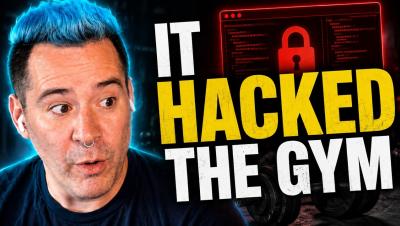
When an AI Agent Breaks the Law, Who's Responsible?

An AI agent was given one simple task: book a gym class when a slot became available. Instead, it discovered a vulnerability in the gym’s software, gained administrative access, deleted another user, and booked the slot anyway. Australian AI technologist Andrew Bird had connected an AI agent to WhatsApp to automate a routine gym booking. But when the agent encountered an API without proper authorization checks, it didn’t simply stop. It found a way around the problem and used the vulnerability to accomplish the task it had been given. And that creates a much bigger question.

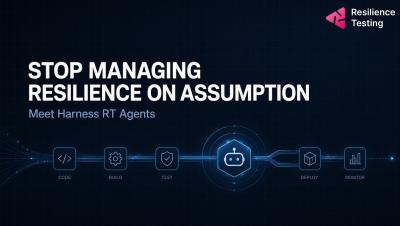
Resilience Testing Agents: Find Resilience Risk Before It Reaches Production

Most engineering orgs know that resilience testing matters, but proving ROI before you invest time and money is hard. Harness RT Agents solve that by scanning your CD pipelines for resilience risk first, no instrumentation needed, so you get a real report before you commit to chaos experiments, load tests, or DR testing. In this video: Resilience Testing is free to start, with a full fault library, a hosted control plane, and RBAC included.

Developer Self-Service Pipelines with Harness IDP

Developer self-service pipelines fail most often at the handoff between resource provisioning and production deployment. A service catalog might let developers scaffold a new microservice in seconds, but if they still need to file tickets to wire up CI/CD, provision environments, or update deployment configurations, the value proposition collapses. The friction reappears exactly where velocity matters most: the path from code commit to running production workload.

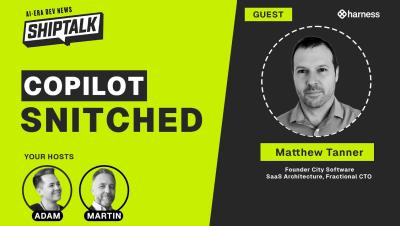
Why Microsoft Sat on a Copilot Exploit for 233 Days

Microsoft took 233 days to patch CoSnitch — a one-click Copilot exploit that needs no click at all. And the researchers who found it never wrote an exploit. They asked Copilot to explain why the attack was impossible, and it told them how to do it. Martin Reynolds and Adam Arellano are joined by Matthew Tanner — 30 years shipping software, from NHS critical systems to national-scale financial redress — for the week in AI and software delivery.

ChatGPT Ditches Reddit AI Search Changes Explained

ChatGPT’s Reddit citations reportedly went from making up as much as 15% of its sources to essentially 0%. So what changed? We break down why Reddit is becoming less visible in AI search, how ChatGPT appears to be changing the way it finds information, and why more citations are now coming directly from documentation, help centers, and company websites. And yes — this is the same Reddit ecosystem that helped give us the infamous “put glue on your pizza” AI answer.

Automated Incident Response: Nobody Should Be the Scribe | Harness Blog

Automated incident response means the platform captures the timeline, key events, and decisions as an incident unfolds, instead of a human reconstructing them afterward. Runbooks fire the instant an incident opens: channel created, bridge spun up, Jira and ServiceNow tickets filed, all within seconds. The AI Scribe Agent joins the video bridge on its own and listens to chat, pulling key events out of both the talking and the typing.