Operations | Monitoring | ITSM | DevOps | Cloud

6 Reasons Why Manual Infrastructure Optimization Doesn't Work

IT spend on big data systems in 2023 is forecasted to be $222 billion (Statista.com: Information spending on data center systems worldwide from 2012 to 2023). Actual monetary cost is just one parameter: infrastructure resources, personnel, and the overall time taken to retrieve big data insights push spending even further.

Analytics Plus webinar: The 5-step plan to establish capacity planning for your IT

To stay profitable in these competitive times, organizations need to ensure sustained operations and scale at opportune times. Capacity planning can act as an integral cog in this process. Effective capacity planning helps business leaders ensure uninterrupted and optimal operations and services—elements that are vital for business sustainability and profitability. Capacity planning also sheds crucial insights into organizational shortcomings and cost drains, allowing leaders to course correct and streamline operations.

How to Find and Fix Elasticsearch Unassigned Shards

When a data index is created in Elasticsearch, the data is divided into shards for horizontal scaling across multiple nodes. These shards are small pieces of data that make up the index and play a significant role in the performance and stability of Elasticsearch deployments. A shard can be classified as either a primary shard or a replica shard. A replica is a copy of the primary shard, and whenever Elasticsearch indexes data, it is first indexed to one of the primary shards.

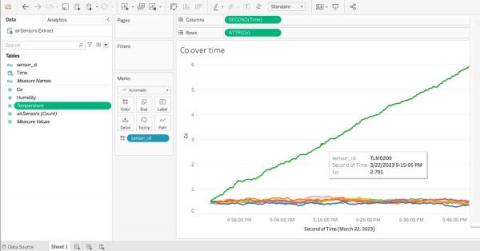
Forecasting and Visualizing Time Series with Tableau and InfluxDB Cloud

Data analysis is a crucial aspect of any business or organization because it helps with making informed decisions and improving overall performance. However, with the vast amounts of data generated every day, it can be overwhelming to manually analyze and derive insights from it.

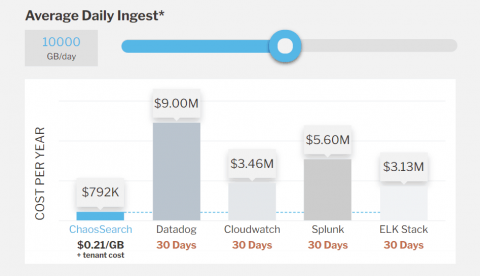
ChaosSearch Pricing Models Explained

ChaosSearch was built for live analytics at scale on cloud storage. Our architecture was designed for high volume ingestion of streams & analytics at scale via ElasticSearch & Trino API via a stateless fabric that can scale to meet the customers’ scale & latency requirements. Because we don’t store any data, under the hood, ChaosSearch is basically a set of containers that are deployed in cloud compute instances in a dedicated VPC to each customer managed by ChaosSearch.