Operations | Monitoring | ITSM | DevOps | Cloud

A simpler way to run AI agents in Bitbucket Pipelines

AI agents can help investigate failed builds, fix flaky tests and automate other development tasks. But setting up those agents has required more Pipelines configuration than it should. Agent-powered steps often need different compute, permissions and runtime settings from ordinary build and test steps. Until now, teams have either repeated those settings across every agent-powered step or tried to make one set of global defaults work for everything.

Monitor test health at a glance in Bitbucket Tests

When a team relies on automated tests in CI/CD, knowing that tests ran is only the beginning. Understanding whether the suite is healthy, which tests need attention, and how a specific test has behaved over time — that’s what drives action. Bitbucket Tests is evolving to make those answers easier to find and give you tools to improve your test health.

Driving Impact and AI Adoption as an FDE

Enterprise AI is only useful when it actually runs in production, inside the tools teams already depend on. Getting there is harder than it sounds. Forward Deployed Engineers at Atlassian work directly inside some of the world's largest organizations, building AI-powered agents, connectors, and workflows on Atlassian's platform. They work alongside customers to understand the real constraints, design solutions that hold up at scale, and see them through to deployment.

Why Founders Pivot, and Why You Should Too | Atlassian for Startups | Atlassian

In the Startup Stories with Atlassian series, we interview founders about their entrepreneurial journey, learn about the problems they are trying to solve, and explore how their teams are using Atlassian tools to grow and deliver value to their customers. In this episode of Startup Stories with Atlassian, Adam sits down with Stan Suchkov, Founder and CEO of Evolve, to explore why pivoting isn't the failure most founders fear – and why the best founders do it deliberately, quickly, and without losing their team in the process.

How we made vulnerability fixes review-ready with Agentic Pipelines

Routine vulnerability fixes are rarely difficult in isolation. The interruption that they cause is the problem: pick up the ticket, trace the dependency, update the package or image, regenerate files, run the checks, open the pull request, then return after deployment to close the loop. That repeated handoff was a good candidate for automation with agentic pipelines. The goal was simple: start the day with a tested pull request instead of another ticket to pick up.

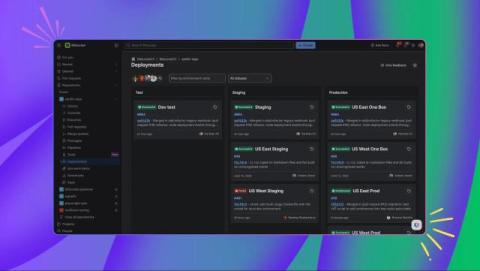
Introducing the redesigned deployments experience

You shouldn’t have to hunt through a cluttered dashboard to understand where your code is deployed. The Deployments page is where teams turn for a quick answer: what is in test, what is in staging, what reached production, and what needs attention right now. The older page made that harder than it needed to be. Our new Pipelines Deployments page makes it easier to scan, filter, and act on.

Agentic Pipelines | Bitbucket Blitz | Atlassian

Most CI/CD pipelines are fragile bash scripts that break when things change. What if your pipeline could think? Agentic Pipelines lets you add AI agents as steps in Bitbucket Pipelines. In this video, I show an agent that reads a design spec from Confluence, generates frontend code, runs tests, and opens a PR, all inside a pipeline. With Agentic Pipelines, Bitbucket goes from a CI/CD platform to a full workflow and automation engine you can use far beyond builds and deploys.

Bitbucket Tests now supports tracking tests from multiple branches

Tracking tests on non-default branches was one of the most requested capabilities during the Bitbucket Tests (beta). We heard you, and today, we’re shipping it. Most teams don’t ship from main. Integration happens on develop, stabilisation on staging, releases cut from release. Until now, Bitbucket Tests only tracked the tests from default(main) branch, leaving the branches that actually matter invisible. Multiple branch tracking in Tests changes that.

Share packages across your workspace with internal packages

We launched Bitbucket Packages to give teams one place to manage code, pipelines, and artifacts, and we’ve been expanding it ever since, first with Maven and npm, then PyPI and NuGet. Every one of those packages has shared one trait: it lives inside a single repository and inherits that repository’s permissions. Most of the time, that’s exactly what you want. But it also means sharing a package across repositories has meant granting people access to source code they never needed to see.

Custom deployment permissions for your environments (Beta)

You shouldn’t have to grant full repository admin rights just to let an engineer or release manager trigger a deployment. To solve the all-or-nothing access problem, Bitbucket Pipelines introduces custom deployment permissions (Beta). You can now gate specific environments to authorized users and groups, ensuring safer releases and easier compliance. Left: Add users and groups to gate deployments for this environment.