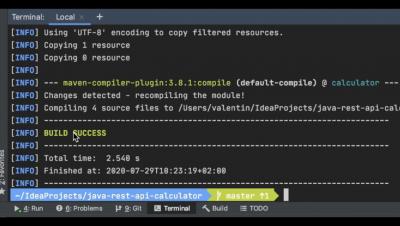
6. How to Run JUnit Tests for a Java Project in Jenkins
DevOps 101: CI/CD Pipelines with Jenkins Course


The goal of Java application monitoring is to minimize the time it takes to discover a problem with a Java application (mean time to detect, or MTTD) and the time it takes to recover from it (mean time to resolve, or MTTR). Understanding what's going on in our code is the biggest step in finding and eliminating the root cause of a problem, and let's face it — that code that seemed clear and concise when we wrote it a year ago might not be as "self documenting" as we thought.
Java is a well-established object-oriented programming language that epitomizes cross-platform software development and helped to popularize the “write once, run anywhere” (WORA) concept. Java runs on billions of devices worldwide and powers a huge range of important software, such as the popular Android operating system and Elasticsearch. In this tutorial, we will go over how to manage Java logs with the ELK Stack and Logz.io.
Over time, Java has become a popular programming language in software development. Although Java is more popular with developers than C or C++, this programming language still has its problems. Here are seven Java development mistakes that developers can make and how you can avoid them.
Java is one of the most popular, flexible and useful programming languages with a very vibrant community to support it. Many of our customers use Java to create amazing applications, it’s an application on a single VM, or based on microservices running on Kubernetes. Naturally, we made it simple to understand the performance of Java-based applications using SignalFx Microservices APM.
When it comes to troubleshooting application performance, metrics are no longer enough. To fully understand the environment you need logs and traces. Today, we’re going to focus on your Java applications.
Having visibility into your Java application is crucial for understanding how it works right now, how it worked some time in the past and increasing your understanding of how it might work in the future. More often than not, analyzing logs is the fastest way to detect what went wrong, thus making logging in Java critical to ensuring the performance and health of your app, as well as minimizing and reducing any downtime.