
Operations | Monitoring | ITSM | DevOps | Cloud

MCP for SLA Monitoring: Uptime, MTTR & MTTA

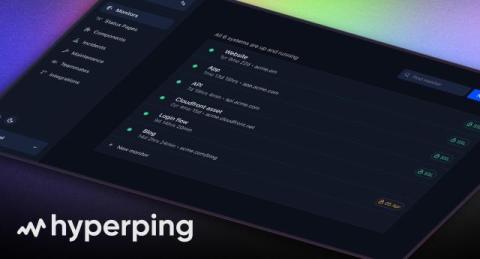
MCP for SLA monitoring gives an AI agent direct access to measured uptime, mean time to resolve (MTTR), mean time to acknowledge (MTTA), outages, and reliability risks. With Hyperping, you can ask Claude, Cursor, Codex, or another MCP client for an SLA report and get an answer based on your live monitoring data instead of copying numbers between dashboards. The distinction between monitoring data and SLA compliance matters. Hyperping measures availability and incident response.

Catch Next.js Hydration Errors With Playwright Tests

Playwright can catch Next.js hydration errors by listening for browser console failures and then exercising an interaction that only works after React has attached its event handlers. This detects pages that return 200 OK and display server-rendered content but fail when a customer clicks, types, or navigates. Next.js defines hydration as React attaching event handlers to the server-rendered HTML.

Monitor Magento Checkout With Playwright: Full Guide

A Magento checkout monitor should prove that a customer can select a product, create a cart, reach checkout, enter a shipping address, and load the expected delivery and payment methods. Playwright can test the rendered storefront while also checking the GraphQL or REST requests behind it. Adobe Commerce and Magento Open Source provide several testing tools, including a Functional Testing Framework and web API tests.

How to Monitor WooCommerce Checkout With Playwright

A WooCommerce checkout monitor should verify that a shopper can open a product, add it to the cart, reach checkout, enter valid details, and see a usable payment option. Playwright is a good fit because these failures often happen after the server has already returned a successful HTTP response. WooCommerce itself uses Playwright for its end-to-end tests. A scheduled production check uses the same browser behavior for a different purpose: finding a broken customer journey between deployments.

5 Key Differences Between Playwright and Puppeteer

Hyperping· Uptime monitoring Know before your customers do. Monitor from 18 regions and route alerts by phone, SMS, Slack or email. Start free Playwright and Puppeteer solve the same problem, driving a real browser from Node.js, and Playwright was started by engineers who previously built Puppeteer. That shared ancestry makes the two APIs look similar at first glance, which is exactly why the differences below catch people off guard.