Operations | Monitoring | ITSM | DevOps | Cloud

Are SOC 2's days numbered? #SOC2 #CodeReview #AICoding #DevOps #SoftwareDevelopment #LLM #SpeedScale

As companies adopt AI coding tools, code review processes are breaking down. Traditional compliance methods are slowing teams down, but human engineers aren't going to spend hours reading AI-generated low-level code forever. How will SOC 2 adapt to the era of AI-driven development? Drop your thoughts in the comments and subscribe for more tech insights! Learn more: speedscale.com.

Cloud Migration Strategies, the 6 Rs, and How to Avoid Getting Stuck Mid-Move

Consider a platform team that spends four months building a thorough migration plan. Its pilot, a stateless order-status API, runs on AWS within three weeks. Six months later, that API is still the only workload in the cloud. In this scenario, the blockers are not exotic technical failures.

Incident Response Metrics Worth Tracking (Beyond MTTR)

Most engineering teams track exactly one incident response metric, and it is usually MTTR. It appears on the quarterly slide, it goes up or down by a few minutes, someone says "we need to bring that down," and nothing about the next incident changes. The problem is not that teams measure the wrong thing out of laziness. The problem is that incident response metrics are genuinely hard to design, and a single average duration is the easiest number to produce from an incident tracker.

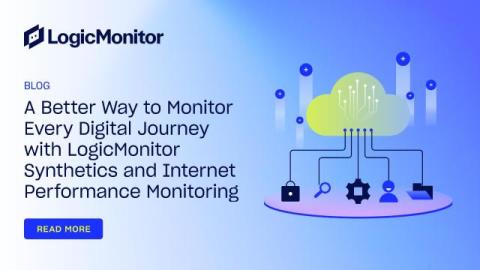
A Better Way to Monitor Every Digital Journey with LogicMonitor Synthetics and Internet Performance Monitoring

LogicMonitor Synthetics and Internet Performance Monitoring helps ITOps teams catch digital experience issues earlier with outside-in visibility across apps, networks, APIs, and SaaS.

ilert AI SRE is generally available

When you get paged at 3am, it takes about 30 seconds for the notification to reach you and maybe two minutes until you're in front of a laptop, awake enough to read. What you see then is usually a raw alert. A metric name, a threshold, a link to a dashboard. Then the ritual starts: open the dashboard, check what deployed in the last few hours, grep the logs for the first error, ask in Slack whether anyone touched the database. ‍ Most of that time is search.

You Can Have Your Pi and Kepler It Too

One of the features I have been wanting in Kepler for a long time was the ability to use Pi as my agent when spinning up tasks. Pi is such a minimal harness that it doesn’t prompt for approval for every little thing and it’s system prompt let’s the model just be itself. That minimalism comes at a cost, though. Pi doesn’t have ACP support out of the box, so that means we haven’t been able to officially support it in Kepler, yet.

JFrog Agent Power for AWS Kiro

JFrog is bringing software supply chain governance to AWS Kiro. Operating as a power plugin within Kiro, JFrog delivers package safety, agentic access to the JFrog platform, and the JFrog AI Catalog. With simple setup, AI agents make supply chain aware decisions right inside the IDE, ensuring dependencies come directly from Artifactory rather than unverified public registries.