Operations | Monitoring | ITSM | DevOps | Cloud

What Does a Network Administrator Do? Skills and Faster Fixes with Network Observability

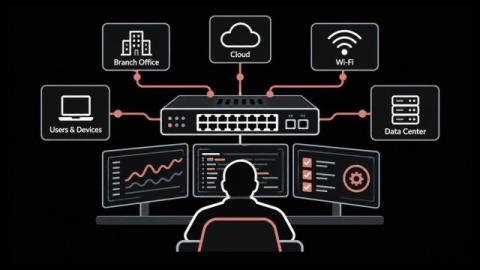
When a branch office can’t reach the ERP system and customer calls start dropping, who gets the call? It’s almost always the network administrator. What that person does the rest of the week is less clear, and a CIO, a CFO and the admin themselves would probably each describe it differently. Part of the reason is how much the network has grown. Ten years ago it was mostly switches, cables and one building.
VoIP Monitoring: Metrics, Tools and How to Fix Poor Call Quality

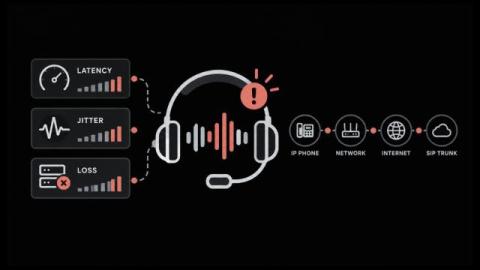
With VoIP monitoring, you hear about a bad call before anyone opens a ticket. Voice handles trouble worse than most traffic on your network. When a file download drops packets, it just asks for them again. A live call has no time for that. A 2% burst of packet loss, which a download wouldn't notice, is enough for everyone on the call to hear a gap. Most of those problems start on the network path, which you can measure and fix.

Running Ansible Playbooks in CI/CD: GitHub Actions and GitLab CI Guide [2026]

Most teams reach for Ansible in CI/CD pipelines the same way: a shell step that runs ansible-playbook, SSH keys stored as secrets, and a growing list of manual steps nobody documented. It works until it doesn't : then the failure happens at the worst possible moment and the pipeline becomes a debugging session.

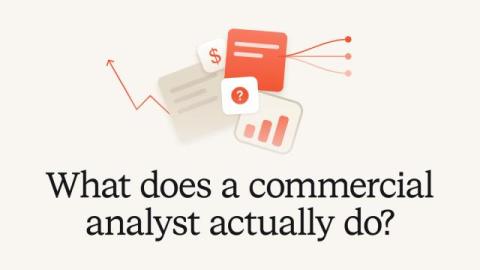
What does a commercial analyst actually do?

I don't write SQL. Not by hand anyway. That might sound like a confession, but it's true of most analysts (and engineers) now. In the 9 months since joining incident.io I have built headcount models for hiring decisions, a Slack bot for assigning new customers, guidance for our AI data analyst, and a couple of internal web apps. If you asked me which of those counted as "analysing data", I'd struggle to say. A lot of that comes down to the "commercial" part of the job title.

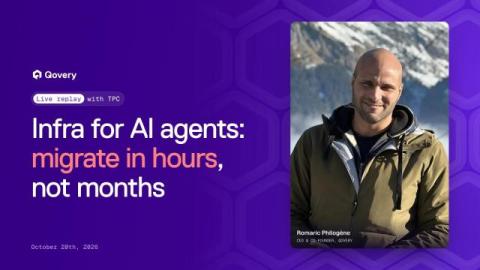
Infrastructure for AI Agents: Migrate in Hours, Not Months (Live Replay)

Replay and key takes from our October 20 live with TPC: why Day Two is 80% of infrastructure work, why shared staging breaks when agents write the code, how agents cut migrations from months to hours, and how to keep agents under control with policy tokens and audit logs. Romaric founded Qovery to make Kubernetes accessible to every engineering team. He writes about platform strategy, developer experience, and the future of cloud infrastructure.

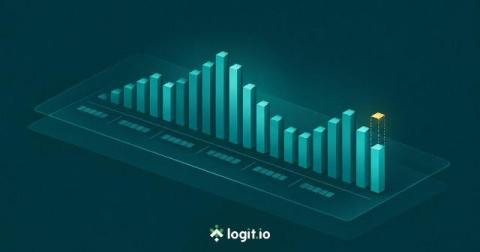
Reading your ingestion history: hourly log counts, the partial hour and 7-day trends

The ingestion card on your Logit.io dashboard has a 24h / 7d toggle for Logs and Metrics, hourly log counts built from counter increases and a dotted line for the hour that is still filling in. Those three changes decide whether a dip on the chart is a real problem or just the clock.

AI-assisted log investigation on Logit.io today: Hosted OpenSearch MCP and onboarding AI prompts

On 8 October 2026 Elastic announced the private preview of Elastic nightshift AI SRE, an AI agent built into Elastic Observability that detects and investigates issues and shows its reasoning. It is a sign of where observability tooling is heading: more of the first hour of an incident handled by an assistant that reads your telemetry. Short answer: Logit.io does not offer an autonomous AI SRE agent.

Long USB Cable for Conference Cameras

A conference camera usually belongs near the meeting room display. The computer may sit under the table, on a presenter's desk, or inside an equipment cabinet. Connecting the two can require a much longer cable than the one supplied with the camera. A long USB cable for a conference camera needs to do more than reach the port. It must support the camera's USB requirements, provide the necessary power arrangement, and work with the complete connection path. A matching connector or an impressive speed label is only part of the decision.