Operations | Monitoring | ITSM | DevOps | Cloud

HPC Configuration: How Configuration Management Can Enhance AI Workload Efficiency

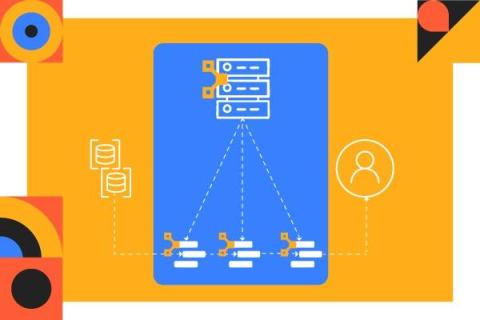
High-performance computing (HPC) configuration has become paramount for AI workloads. Companies investing in AI workloads often find themselves with predictable problems: Lots of nodes that are hard to integrate and harder to manage together, under-utilized resources, deployment struggles, inconsistent configurations, and drift.


Feature Friday #38: Developing modules that take input

CFEngine build modules are great for quickly integrating 3rd party policy into your policy set. Module input (not to be confused with inputs in body common control or body file control which are the list of policy files to load) allows you to define values that apply for a particular module as it’s integrated into your policy set. Let’s take a look at a case of extending a module to support input.

Feature Friday #37: Decisions based on arbitrary semantic versions

Ever need to make a decision based on the version of something? The version_compare() function might be useful for you.1 Over time, software changes and features are added and removed. Sometimes, we need to make a decision based on versions. For example, the Include directive in ssh_config was introduced in OpenSSH 7.3.2 Let’s take a look at how we could possibly use it. This example illustrates the basic use of version_compare()

Need for Automation: How to Scale Infrastructure Effectively

As businesses scale, managing infrastructure becomes increasingly complex and distributed, leading to challenges in consistency, performance, and security. Manual configurations and outdated practices can no longer meet the demands of today’s highly competitive businesses. To tackle these issues, adopting a phased approach; Day 0, Day 1, and Day 2; provides a practical roadmap for scaling infrastructure automation effectively.

What is Software Deployment Automation & Which Tool is Right for You?

Software deployment automation can simplify and speed up your delivery cycle. It can reduce risk, allow teams to easily test after changes are made, and help provide consistency for the overall development pipeline. If it sounds complicated, we’re here to break it down each step into a cheat sheet that provides tips and best practices for the software deployment automation process.

Linux Security: Keeping Linux Machines Secure with Less Tinkering

Every operating system has its quirks, and Linux security is no different. Whether you’re on Team Penguin or running mostly Windows boxes (or a bit of both), you’ll need to take different steps to manage security on different OSes. Like any OS, Linux security comes with its own peculiarities, pitfalls, and best practices.

Feature Friday #36: Formatting policy with cffmt

Looking for a tool to help you format your CFEngine policy? Have you heard of cffmt? You might recall that we had a chat with the author, Miek Gieben in The agent is in - Episode 24.1 In case you missed it, cffmt is a command line tool for formatting CFEngine policy files, like gofmt for.cf files.2 Let’s take a look. Consistent formatting can really ease reading of policy, but sometimes editors are configured differently and you can end up with inconsistently formatted policy.

Avoid Non-Compliance Fines: Automate GDPR Controls

It's expensive when you don't comply with the General Data Protection Regulation (GDPR) controls — take for example the €310 million fine (equivalent to $335 million dollars) that LinkedIn received from the GDPR. In this case, they shared users’ personal data for targeted advertising and behavioural analyses, without asking for user consent. Can you afford €310 million? It might be time to automate GDPR controls for 24/7 compliance.