
Operations | Monitoring | ITSM | DevOps | Cloud

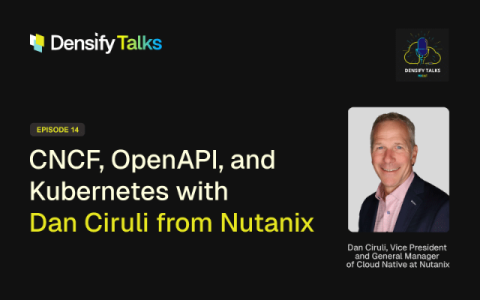
Densify Talks, CNCF, OpenAPI, and Kubernetes with Dan Ciruli from Nutanix

<span data-mce-type="bookmark" style="display: inline-block; width: 0px; overflow: hidden; line-height: 0;" class="mce_SELRES_start"></span> Andrew Hillier sits down with Dan Ciruli, who leads the cloud native product management team at Nutanix.
Scaled Kubernetes Resource Management Requires Cross-Team Collaboration

As organizations scale their Kubernetes infrastructure, one truth becomes clear: no single team can optimize it alone. Efficiency, resilience, and cost-effectiveness in Kubernetes environments depend on the collective effort of multiple personas, each bringing essential knowledge and responsibility. But it’s not just about division of labor. It’s about active collaboration across roles to unlock the full potential of the platform.

Automating Kubernetes Resource Optimization: Strategies for Efficient, Scalable Workloads

Kubernetes gives you the amazing power to deploy and manage containerized applications. But this power comes with a trade-off. Instead of letting you focus only on writing code and delivering features, Kubernetes also shifts the burden of resource optimization i.e., cost control, performance, and scalability, directly onto your shoulders. The answer to these challenges is automation. Automated optimization takes the guesswork out of resource allocation.

Densify and Nutanix Partner to Deliver AI-Driven, Fully Automated Kubernetes Optimization

We’re thrilled to announce our partnership with Nutanix, integrating Densify’s AI-powered Kubernetes optimization solution, Kubex, with the Nutanix Kubernetes Platform (NKP). This collaboration brings together two leading technologies to radically improve how enterprise Kubernetes environments are managed—through AI-driven insights and end-to-end automation of resource optimization.

Densify 3.0: Introducing Cloudex, Smarter K8s Automation, and Enhanced API Power

We’re excited to announce the release of Densify 3.0, a major step forward in our mission to deliver precision-driven cloud optimization across Kubernetes and public cloud environments. This release brings to life a new user experience, powerful automation capabilities, richer data insights, and smarter APIs—all designed to simplify and scale your optimization journey.

Announcing Densify's Latest Release: Smarter Kubernetes Automation, Built for the Enterprise

To coincide with KubeCon Europe 2025, we’re excited to announce the latest release of Densify’s Kubernetes optimization engine, Kubex, which delivers full-stack resource management and seamless automation resource optimization at enterprise scale. This release delivers the advanced controls enterprises have been asking for—without sacrificing the intelligence and precision that sets Densify apart.

Amazon EKS Auto Mode

EKS Auto Mode is a huge step forward in managing your EKS clusters by automating complex tasks, enhancing cost efficiency, simplifying management, and ensuring resource optimization. These features make Kubernetes more accessible and manageable, particularly for organizations looking to leverage containerized environments without the overhead of extensive manual configuration and management.

Introducing Kubex: Tackling the Kubernetes Blind Spot

Kubernetes (K8s) has transformed cloud-native infrastructure, enabling enterprises to build scalable, agile environments. Yet, alongside its benefits, Kubernetes introduces a significant blind spot —a rapidly growing part of cloud budgets that has become more and more difficult to optimize. Excess spend is common, and is caused by incorrectly specified container resources, stranding tremendous amounts of resources while at the same time introducing significant operational risk.

How Densify solves the cloud efficiency challenge

The FinOps Foundation states that “For the first time, Reducing waste was the highest key priority for FinOps practitioners across all spending tiers. This may be influenced by macroeconomic trends, with businesses looking for ways to reduce spending without reducing the value they are getting from their cloud investments.”

Kubernetes Autoscaling vs. Optimization: Understanding the Difference

In cloud-native environments, autoscaling and optimization are often confused, yet they serve different purposes. While Kubernetes offers several built-in autoscaling features, these are often mistaken for optimization. In reality, autoscaling is reactive, responding to changing demands, whereas optimization is proactive, focused on configuring workloads efficiently from the start.