Operations | Monitoring | ITSM | DevOps | Cloud

Data pipeline monitoring 101: Tracking health and performance across the data stack

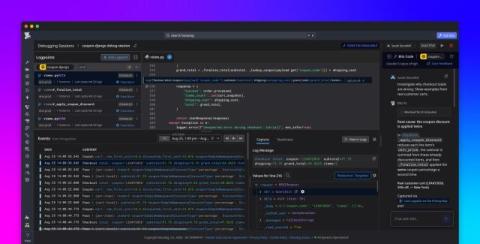
Data pipelines are systems for moving and processing data. They are made up of concatenated services and data stores that programmatically ingest data from upstream sources; filter, transform, enrich, and route that data; and deliver it to downstream consumers.

Investigate account-level churn risk with Product Analytics account segments

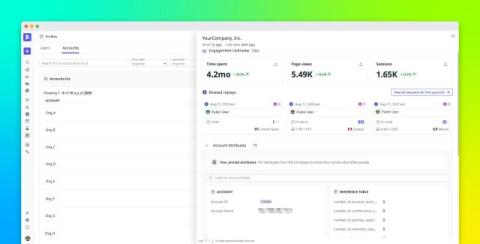
An account can show signs of disengagement long before a renewal conversation begins. Users may stop returning to a core workflow, stall during onboarding, or skip a newly released feature. Product teams often see these signals only at the user level, while annual recurring revenue (ARR), plan, renewal date, and ownership data remain in a customer relationship management (CRM) system or data warehouse.

Instrument serverless apps with agentic onboarding

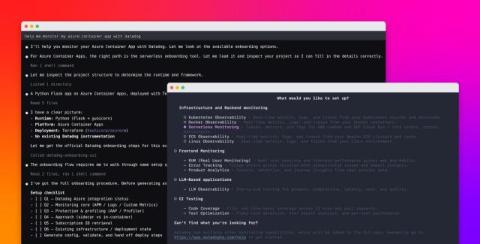
Serverless platforms like AWS Lambda, Google Cloud Run, and Azure Container Apps let teams run applications without managing infrastructure. However, getting full visibility into those workloads has traditionally required a lot of manual setup. A single team may deploy serverless applications across multiple clouds by using tools such as Terraform, AWS SAM, AWS CDK, and the Serverless Framework. Each of these platforms, runtimes, and deployment tools requires its own instrumentation steps.

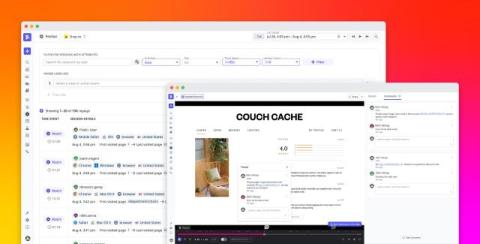
Find, analyze, and collaborate on user sessions in Datadog Session Replay

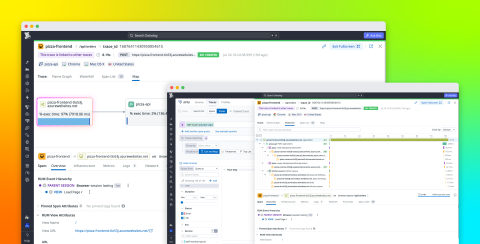
Teams supporting user-facing applications rely on session replays to understand user friction. But resolving an issue or improving the user experience takes more than watching a replay. Engineers, product managers, and designers first need to find the right sessions to investigate, then quickly learn what happened at the key moments. Once they’ve investigated a replay, they need to share what they found across product, design, support, and engineering so that the right teams can act.

This Month in Datadog - July 2026

In July’s episode of This Month in Datadog, Ruxanda Lueck joins Jeremy for a conversation about how you can confidently evaluate and release features that contain AI-generated code. She also discusses her career trajectory from containers to AI, how agentic workflows impact trust during feature development, and the challenges of testing nondeterministic agent behavior.

Product leaders talk safer, faster releases and deeper analysis with Bits | This Month in Datadog

In July’s This Month in Datadog, Jeremy is joined by Datadog product leaders for in-depth conversations about how Bits enables you to confidently evaluate and release features containing AI-generated code, and use natural language to ask, understand, and act across Datadog.