
Operations | Monitoring | ITSM | DevOps | Cloud

Cut CI Environment Setup Time in Half with Chunk sidecar Snapshots

Waiting minutes for CI feedback while you're building with AI agents kills your momentum. Chunk sidecars snapshots let you freeze your environment after setup, so every boot skips the install and starts from a cached state instead of scratch. In this tutorial, we demo how to set up Chunk sidecars, snapshot it, and boot from that snapshot. We also benchmark the difference: a cold sidecar start took 45 seconds. Booting from the snapshot took 12 seconds. That's 30+ seconds saved on every run, multiplied across every developer, branch, agent, and session.

How to Set Up Claude Code with CircleCI MCP Server (Full Demo)

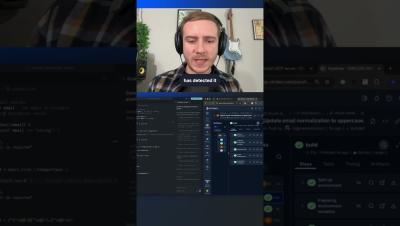
AI agents write code fast, but without a validation layer, fast just means faster bugs. In this video, we connect Claude Code to the CircleCI MCP server so Claude can trigger pipelines, pull build failures into context, and iterate until everything is green. No context switching. No copy-pasting logs.

ACP vs MCP: What's the difference for agentic coding?

An AI coding agent holds many conversations at once. Not only is the user prompting it, the agent also talks to the IDE, showing diffs and asking before it touches a file. At the same time it talks to tools, pulling a failing build or querying a database. Two open protocols standardize those conversations. This guide compares ACP vs MCP in practical terms: what each protocol does and when each applies. ACP (Agent Client Protocol) connects a code editor to an AI coding agent.