The latest News and Information on Serverless Monitoring, Management, Development and related cloud technologies.
Non-Fungible Tokens, or short NFTs, are all the rage right now. Everyone and their pets are starting an NFT project. Some people got rich from using NFTs; others did not. Some say it’s the savior that will rip the power away from big corporations and give it back to the creators; others say it’s just a giant pyramid scheme.
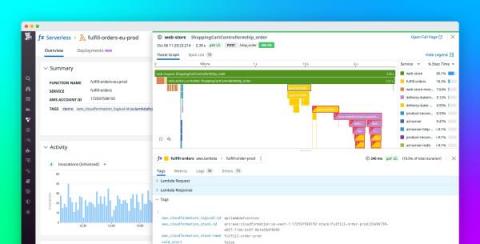
In a serverless application, AWS Lambda functions are typically invoked by JSON-formatted events from other AWS services—like API Gateway, S3, and DynamoDB—and respond with JSON-formatted payloads. Having visibility into these function request and response payloads can provide context around your function invocations and help you uncover the root causes of Lambda function failures.
Python, used in around 53% of all Lambda functions, is the most popular language for doing Serverless. In this article, you’ll get an overview of the need-to-knows for error handling Python in AWS Lambda.
Here’s a quick roundup of the newest product features, resources, and events from Lumigo.
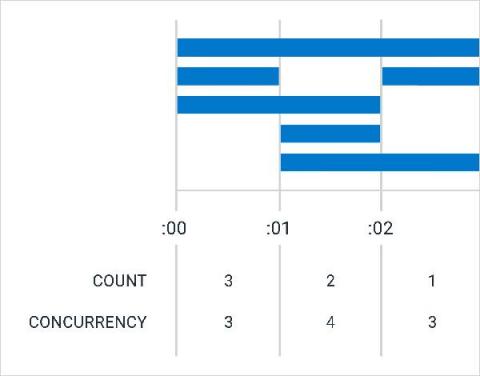
It started with a simple question: Why did one query take 10 seconds, while another almost identical query took 5? At Honeycomb, we use AWS Lambda to accelerate our query processing. It mostly works well, but it can be hard to understand and led us to wonder: What was really going on inside this box called Lambda? These questions kicked off the development of CONCURRENCY, a new aggregate in the Query Builder that lets us look at how many spans are active at once.
AWS Graviton2 processors use the Arm architecture to provide high-efficiency, low-cost computing. AWS already offers the ability to provision EC2 instances powered by Graviton2, and Datadog is proud to partner with them for the launch of new Graviton2 compute resources for Lambda functions. In this post, we’ll discuss how Datadog can provide deep visibility into your Lambda functions across whichever platform you’re using.
Modern computing has come a long way in the last couple of years and the introduction of new technologies is only accelerating the rate of advancements. From the immense compute power at our disposal to lightning-fast networks and ready-made services, the opportunities are limitless. In such a fast-paced world, we can’t ignore economics.