Operations | Monitoring | ITSM | DevOps | Cloud

The latest News and Information on IT Networks and related technologies.

Adding Routing Intelligence To Your Observability Stack

Observability has a blind spot, and for most teams it sits at the network layer. You instrument your services, scrape metrics into Prometheus, ship logs somewhere searchable, and build dashboards that tell you when something is wrong inside your infrastructure. But the routing that carries traffic to and from that infrastructure often lives entirely outside the stack, watched through separate tools that do not talk to your alerting. This piece looks at why routing belongs in your observability pipeline and what it takes to get it there.

Stable IPs for DevOps Monitoring: A Guide to Proxy-Cheap Static Residential Proxies

External monitoring is only useful if you can trust what it tells you. Synthetic checks, uptime probes, and content verifications all run from outside the perimeter, hitting public endpoints the way a real user would. When those checks return clean, honest results, teams catch problems early. When they return noise - false outages, phantom latency, blocked responses - the whole practice degrades into alert fatigue. And a common, under-appreciated source of that noise is the IP address the checks run from.

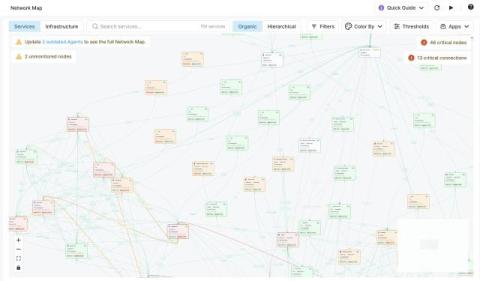
How a global telecom provider built a network operational twin and improved root cause analysis

A leading communications service provider partnered with @selector1327 to create an operational twin of its network, enabling faster root cause analysis and improved operational efficiency across a massive, multi-domain infrastructure.

What Is Alert Fatigue, and Why Do IT Teams Miss Critical Alerts?

Alert fatigue is one of the biggest reasons critical incidents get missed. In this video, learn what alert fatigue is, why it happens, and how reducing noisy, repetitive notifications helps IT teams respond faster to the alerts that actually matter. Whether you're an IT operations professional, SRE, DevOps engineer, NOC analyst, or IT manager, this video explains alert fatigue in simple terms and shares practical ways to reduce alert noise, prioritize critical issues, and improve incident response.

Is Your Network Infrastructure Ready for Agentic AI?

Artificial intelligence is evolving faster than most organizations anticipated. Just a few years ago, enterprises were experimenting with machine learning models and predictive analytics. Then came generative AI, enabling organizations to create content, accelerate workflows, and unlock new productivity gains. Today, we're entering the next phase: agentic AI.

The Impact of 6G on the Future of VoIP

Communication technology has evolved dramatically over the last few decades. From traditional landline systems to internet-based calling, every generation of networks has changed the way people connect. Today, millions of businesses and individuals rely on VoIP for: However, the future of VoIP will not stop with current internet technologies. The arrival of 6G networks is expected to introduce a new era of communication where voice services become faster, smarter, and more immersive.

Top 12 Network Monitoring Tools in 2026: Complete Comparison & Reviews

Modern infrastructure is no longer a stack of routers, switches, and racks sitting in a single data center. Most teams now run a mix of Kubernetes clusters, virtual machines, managed cloud services, and SaaS dependencies spread across regions and providers. Knowing which device is up is not the same as knowing whether your application is healthy.

The NetOps Dashboard Era Is Closing: Our Take on Gartner's 'The Future of NetOps Is Agentic'

For roughly fifteen years, operating a network has meant living inside a vendor dashboard. An engineer’s skill was, in large part, the ability to read those panels quickly and act on what they showed. Gartner’s read in “The Future of NetOps Is Agentic” is that this arrangement is closing, and sooner than most teams have staffed for.