Operations | Monitoring | ITSM | DevOps | Cloud

Getting the Basics of Your Manufacturing Business Right

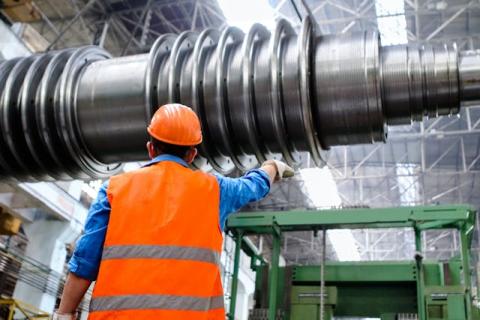
A lot of people think that manufacturing businesses are complicated beasts that need a lot of attention to some pretty fiddly and complicated components to succeed, and sure, that is true but you know what? If you run a manufacturing business, then the basics are really important because, if the foundation of your company is not rock solid then no amount of fancy tech is going to save it. That being the case, let's take a look at the fundamentals you need to nail to find success in manufacturing right now.

Reducing Packaging Line Downtime with Better Adhesive Choices: A Practical Playbook

A clogged nozzle or a springy flap can derail a shift faster than any dashboard metric. One mis-bond at the case sealer turns into a reject, then into rework, then into a red light while operators clear a jam and QA sorts the mess. Most teams treat those stoppages like bad luck. They aren't. In many plants, the line is doing exactly what it was set up to do: run outside the adhesive's comfort zone. The fix is more practical than glamorous-match the resin to your substrate and speed, keep temperatures and bead geometry inside a narrow band, and treat adhesive changes like real changeovers, not side quests.

How ERP Improves Scheduling and Inventory Control for Manufacturers

For manufacturers, meeting deadlines and delivering products on time is only possible when scheduling and inventory are managed with precision. Both are closely connected; without the right materials on hand, production schedules can quickly fall apart, and without efficient scheduling, even a well-stocked inventory may sit unused. An ERP system addresses these challenges by creating a coordinated environment where production timelines and inventory data work together seamlessly.

Part Number: Complete Guide to Product Identification Systems

In manufacturing environments handling tens of thousands of components daily, a single misidentified part can cascade into costly production delays, inventory errors, and supply chain disruptions. The foundation preventing these issues lies in effective part numbering systems-unique identifiers that serve as the backbone of modern inventory management and manufacturing processes.

How MJF 3D Printing Delivers Speed, Strength, and Accuracy

Manufacturing has hit a turning point where traditional methods just can't keep up with modern demands. Companies need parts faster, stronger, and more precisely than ever before. That's where advanced 3D printing steps in to bridge the gap. Modern printing technologies can reduce production time by up to 70% compared to traditional manufacturing methods.

Manufacturing Campuses Are Missing OSHA Marks on Internal Road Safety Features

In 2023, OSHA cited over 1,700 employers for violations related to workplace traffic and pedestrian safety. Many of those cases involved manufacturing campuses-environments where speed and productivity often take priority over safe internal traffic design. When key safety features are skipped during layout planning or later updates, the result isn't just inconvenience. It's a measurable rise in injuries, liability, and downtime.

How To Reduce Manufacturing Downtime Through ERP-Driven Alerts

One of the most expensive and disruptive problems to the operations might be manufacturing downtimes. Besides causing a stop in production, it also causes deadline slippage, brings about high operational cost, and decreases customer satisfaction. With manufacturers doing everything to stay competitive, one of their greatest priorities was to discover how to reduce unexpected stoppages. The ability to manufacture ERP systems and, in particular, the use of alerts and notifications as the means of obtaining real-time insights into the operations is one of the most effective solutions.

What to Know About How Circuit Boards Are Manufactured Today

Circuit boards are the heart of nearly every electronic device, from smartphones and laptops to medical equipment and automotive systems. These compact layers of interconnected components make modern technology possible by allowing electricity to flow in precise patterns. But while circuit boards appear simple on the surface, their manufacturing process is a complex blend of advanced engineering, automation, and precision.

The Role of Precision Engineering in Modern Valve Manufacturing

Valve manufacturing enables the production of components that meet stringent industry standards and customer expectations. The demand for high-quality valves has grown in many sectors, including but not limited to oil and gas and pharmaceuticals. With the increasing complexity of designs and the necessity for reliability, precision engineering offers the tools and methods to achieve excellence in valve production. See how precision engineering shapes modern valve manufacturing, the benefits it brings, and the emerging technologies that improve its effectiveness in the industry.

Cybersecurity Challenges in Automotive Manufacturing

Ever been told to "just install the update" on a system that can't afford a single minute of downtime? Then you get it. In automotive manufacturing, the reality on the floor often differs from what IT expects. Security patches, network scans, and monitoring tools sound good in a meeting. However, when your equipment is tied to real-time processes, even a minor change can cause significant problems.