Operations | Monitoring | ITSM | DevOps | Cloud

Build a Feature and Release It In a Day

AI-generated code security is the part nobody plans for. Ross Hendrickson, CTO of Inspectiv, on what happens after the AI writes it. He can think of a feature and ship it the same day, generating more code than a week of writing it by hand would have produced. The vulnerabilities don't disappear along with the typing. Something still has to review what was generated, secure it, and get it out the door without becoming the new bottleneck.

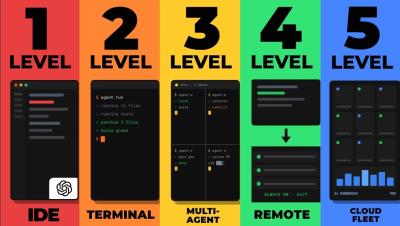
The 5 Levels of Running Coding Agents

If you're trying to run more than a few AI coding agents at once, the real problem shifts from prompting to managing where they live and what they can reach. This video walks through the five levels of agent management, from the IDE all the way to a fleet running in the cloud with access to your own services.

If We're Not Up, The Checkout Breaks

Kintsugi puts sales tax compliance on autopilot for 7,300 companies selling into 110 countries, and its tax engine sits inside other companies' checkouts. The answer has to arrive before the shopper finishes paying. "Typically, a customer's expectation is that we are returning the sales tax estimate on the invoice within 100 milliseconds." The cost of missing is not abstract: "For every minute that our sales tax API, if it ever goes down, our customers are not able to collect roughly $4 million in sales tax that they should be collecting.".

Minga's developers point AI tools at their own infrastructure

Matt Zytaruk, VP of Technology at Minga, on what changed once his developers could point their AI tools at their own infrastructure. Minga checks in 1.5 million students across the eastern seaboard every school morning. They run that platform on Control Plane, which gives their team an MCP server, a CLI, and Terraform-native resources — so a developer can investigate an issue and generate the code for the change without waiting on anyone.

You Vibe Coded an App...Now What?

"Hey, I built this over the weekend. I want to get it in front of customers." And it always hits architecture, security, and infrastructure. Ross Hendrickson, CTO at Inspectiv, calls that gap the chasm. His team crosses it on Control Plane: AI-written code secured, reviewed, and released in a day. Control Plane combines AWS, GCP, Azure and your own hardware into one virtual cloud shaped to your workloads.

AWS, GCP, Azure - We Pick The Best of Every Cloud

When your platform is tied to a single cloud, every move turns into a migration. This team decided it didn't have to be. In this clip, a Control Plane customer explains how separating their platform from the cloud provider underneath changed the math on infrastructure. Instead of being locked to one vendor, they can pick the best services from each cloud and move workloads to AWS without jumping through hoops. The kicker: a migration whose sheer scale would have "scared them off" becomes a non-event once your platform isn't welded to a single provider. Control Plane is an AI-native virtual cloud.

The Biggest Surprise Was the Support | Minga & Control Plane

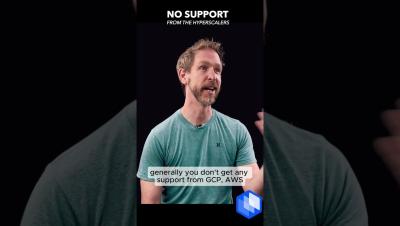
"The biggest surprise was how much support we've gotten from the Control Plane team." — Minga Most teams know the drill: unless you're paying a lot, you don't get real support from GCP or AWS. Minga found the opposite with Control Plane. Whenever an infrastructure issue comes up, the Control Plane team jumps in — digging through logs, tracking down the root cause, and staying in the trenches even when the problem isn't theirs to fix.

Minga cut infra costs 30-40% - and it scales itself | Control Plane

Minga checks in 1.5 million students across the eastern seaboard by 8:30 AM Eastern — then lets that infrastructure wind down an hour later. After migrating to Control Plane, they cut infrastructure costs 30–40% and traded fragile, manual scaling for a platform that scales itself.