Operations | Monitoring | ITSM | DevOps | Cloud

Terraform Modules vs. Resources: When to Promote a Pattern

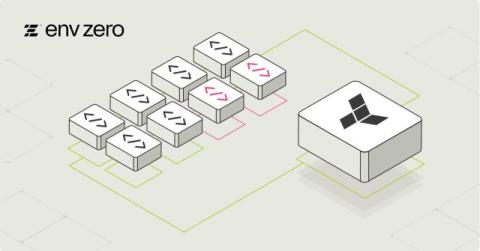
Terraform gives you two ways to express the same infrastructure. You can declare resources directly, or you can wrap them in a module and call that module with inputs. Both produce identical cloud objects. The choice is not about capability, it is about where you want the complexity to live and who you want to be responsible for it. Most teams get this decision wrong in one of two directions.

Terraform Strings: Interpolation, Heredoc & Built-In Functions

A Terraform string is just a sequence of characters, but almost everything you write in HCL touches one: resource names, tags, file paths, generated policies, connection strings. Knowing how Terraform builds, combines, and templates strings will save you from some of the more confusing errors you'll hit in a growing configuration.

How to Migrate Terraform State Between Backends

Terraform state doesn't stay put forever. Teams outgrow local state files, consolidate multiple backends into one, switch cloud providers, or decide it's time to move off a platform that's no longer working for them - HCP Terraform's free tier ending and its resource-based pricing is a common trigger these days. Whatever the reason, the state file itself is the part everyone's afraid to touch, because it's the only record of what Terraform thinks your infrastructure actually is.

Ansible Conditionals: Complete Guide to when Statements [2026]

Last updated: April 2026 Playbooks that run every task every time aren't really automation. They're scripts. Real playbooks make decisions: only restart a service when its config changed, only install a package on Debian hosts, only send an alert when a prior task failed. That decision-making comes from Ansible conditionals.

Export env0 Log Data to SIEM and Monitoring Platforms [2026]

Every time Terraform runs a plan, every time an environment is deployed, every time a variable is changed, env zero generates a record. env zero log forwarding sends that record to your existing SIEM or observability platform automatically. For most teams without it configured, that record lives inside env zero and nowhere else.

Using Open Policy Agent (OPA) with Terraform: Tutorial and Examples [2026]

Infrastructure as Code (IaC) solves the provisioning problem. It doesn't solve the governance problem. You can version your Terraform configuration, run it in a pipeline, review every pull request — and still deploy an S3 bucket with public access, a VM with no encryption, or a resource that exceeds your cost budget. Nothing in the standard IaC workflow checks for those things. The reviewer has to know what to look for. And they won't catch it every time. Policy as Code changes that.

Drift Under Control: Keep Your Infrastructure Consistent with Continuous Detection, Intelligent Analysis, and Safe Remediation

In cloud-native environments, infrastructure is in constant flux. Teams move fast, leveraging Infrastructure-as-Code (IaC), ephemeral resources, and automation to iterate quickly. But speed brings a cost: configuration drift. A single manual change in the cloud console, an untracked automation script, or an out-of-band fix can cause your infrastructure to fall out of sync with code. Over time, this erodes trust, breaks pipelines, and introduces silent risk.

Introducing Code Optimizer (beta) - Better and Safer Infrastructure Code, Right Inside Your Git

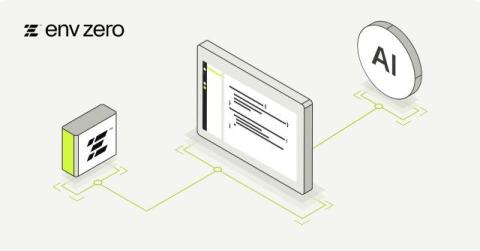
Infrastructure code rarely stays clean on its own. Teams move fast, and reviews aren’t always deep or consistent. Over time, misconfigurations build up and increase the risk of outages, security gaps, or unpredictable behavior. Static scanning tools can help, but they often require setup, expertise, and don’t always reflect how infrastructure code is actually used across environments. Code Optimizer, now in beta, helps teams catch those issues earlier.