Operations | Monitoring | ITSM | DevOps | Cloud

The latest News and Information on Continuous Integration and Development, and related technologies.
Dispatching Ansible playbooks with CFEngine

In large organizations and infrastructures, it’s fairly common to use multiple configuration management tools. There are many reasons for this. Different teams may have different preferences, some tools suit certain use cases better than others, and existing systems can come with their own limitations. Whatever the reason, the tools don’t have to work in isolation. In this post, we’ll show how to run Ansible playbooks on CFEngine-managed hosts using Mission Portal.

5 takeaways from the State of Software Delivery Q3 Pulse report

Software teams are taking on more work than ever. Developers are juggling more branches, coding agents are keeping CI busy through the weekend, and builds are passing more often and finishing faster. But is all that extra activity helping teams ship faster? Today we released the 2026 State of Software Delivery Q3 Pulse report, the latest in our quarterly series tracking how software teams are adapting to AI-driven development.

Merge queue APIs now available in Bitbucket Cloud

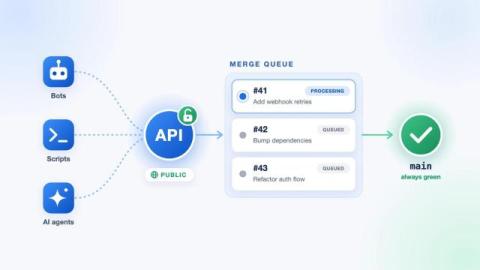
Merge Queues help keep your busy branches stable by testing how changes work together before they’re merged. Today, we’re introducing public APIs for Merge Queues, available to all Standard and Premium workspaces in Bitbucket Cloud. The new APIs let your tools use the existing merge endpoint to queue pull requests, track their progress and respond to the outcome.

How we used Agentic Pipelines to turn test coverage into a daily habit

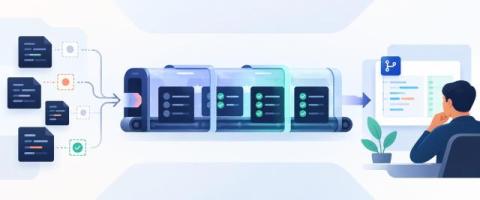
Engineers write tests for the logic that worries them and let the small details slide. One of our commerce engineering teams now has a scheduled agent that finds the thinly tested files, writes the missing tests, and opens a pull request for review. Nobody decides to skip a unit test. The core logic gets covered, the small details don’t make the cut, and most days that’s a fair trade.

CI/CD Pipeline Observability: GitHub Actions, Jenkins and ArgoCD

CI/CD observability guide: the OpenTelemetry CI/CD conventions, tracing GitHub Actions and Jenkins runs, queue time, failure vs error, and deploy markers. Sejal Pandey works on content and growth at Last9, writing about observability, reliability, and SRE practices.

Running a Green CI Pipeline Isn't the Hard Part Anymore

AI writes code faster, but CI still repeats costly work. See how Harness CI cuts unnecessary tests, recompilation and dependency downloads. Six months ago, your team adopted an AI coding assistant. Pull requests doubled. Generated code started landing in branches faster than reviewers could read it. The CI pipeline kept up for about three weeks. Now the queue backs up by mid-morning. Builds take 38 minutes. 4,000 tests run on every commit when 60 are relevant.

Stacked PRs: what they are and how to run CI on a stack

Large pull requests can be a pain to review. When a change touches dozens of files and adds hundreds of lines of code, reviewers have a lot to work through before they can approve it. And if something needs to change, the whole PR goes through another round of review. Stacked PRs let developers split a large change into smaller, dependent pull requests that can be reviewed separately.