

Operations | Monitoring | ITSM | DevOps | Cloud

Run AURA in Slack without opening a single inbound port

Making an SRE agent available in Slack sounds straightforward until you start thinking about what that agent can access. If it's connected to Kubernetes, you need to consider how Slack communicates with the agent, what infrastructure the agent can inspect, and who can ask it to do something. Making operational tools easier to use shouldn't mean exposing another service or giving everyone unrestricted access to production.
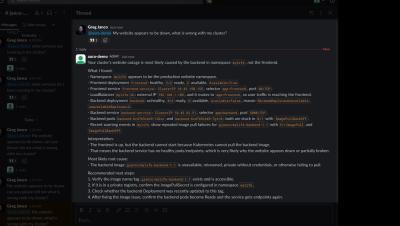

AI SRE Agent Slack Integration: Ask AURA About Your Kubernetes Cluster | HQ

Running an agent in your cluster should not mean opening it to the internet. AURA reaches Slack over an outbound socket, so the cluster stays locked down. Jeff Vogt connects an AURA deployment running in Kubernetes to Slack using AURA's direct Slack integration. The setup is a Slack app with an app token and a bot token, plus a few lines added to the deployment's configuration. The Kubernetes MCP server is already deployed and connected to AURA before the video starts.

Where Jev fits in ops

If you're using agents and MCPs to get a better understanding of your environment or work through an investigation, you can get a lot of useful information back. You can pull logs, look at recent changes, and check how services are configured, but you're still the one deciding what to do with all of it. That part of the process still lives in your head. To see where Jev might fit, look at decisions your team already makes and work backwards from them.