Operations | Monitoring | ITSM | DevOps | Cloud

How to Get Started with JavaScript and InfluxDB

This article was written by Nicolas Bohorquez and was originally published in The New Stack. Scroll below for the author’s picture and bio. Telegraf is the preferred way to collect data for InfluxDB. Though in some use cases, client libraries are better, such as when parsing a stream of server-side events. In this tutorial, you’ll learn how to read a data stream, store it as a time series into InfluxDB and run queries over the data using InfluxDB’s JavaScript client library.

A Study in Graylog's Versatility

Recently, I explored the case for Graylog as an outstanding means of aggregating the specialized training data needed to build a successful, customized artificial intelligence (AI) project. Well, that’s true, of course. My larger point, though, was that Graylog is a powerful and flexible solution applicable to a very broad range of use cases (of which AI development is just one).

How to Optimize Spark Enterprise Application Performance | Pepperdata

Does your big data analytics platform provide you with the Spark recommendations you need to optimize your application performance and improve your own skillset? Explore how you can use Spark recommendations to untangle the complexity of your Spark applications, reduce waste and cost, and enhance your own knowledge of Spark best practices. Topics include: Join Product Manager Heidi Carson and Field Engineer Alex Pierce from Pepperdata to gain real-world experience with a variety of Spark recommendations, and participate in the Q and A that follows.

How to Maximize the Value Of Your Big Data Analytics Stack Investment

Big data analytics performance management is a competitive differentiator and a priority for data-driven companies. However, optimizing IT costs while guaranteeing performance and reliability in distributed systems is difficult. The complexity of distributed systems makes it critically important to have unified visibility into the entire stack. This webinar discusses how to maximize the business value of your big data analytics stack investment and achieve ROI while reducing expenses. Learn how to.

How DevOps Can Reduce the Runaway Waste and Cost of Autoscaling

Autoscaling is the process of automatically increasing or decreasing the computational resources delivered to a cloud workload based on need. This typically means adding or reducing active servers (instances) that are leveraged against your workload within an infrastructure.

Big Data Performance Management Solution Top Considerations

The growing adoption of Hadoop and Spark has increased demand for Big Data and Performance Management solutions that operate at scale. However, enterprise organizations quickly realize that scaling from pilot projects to large-scale production clusters involves a steep learning curve. Despite progress, DevOps teams still struggle with multi-tenancy, cluster performance, and workflow monitoring. This webinar discusses the top considerations when choosing a big data performance management solution.

How to Parse JSON with Telegraf into InfluxDB Cloud

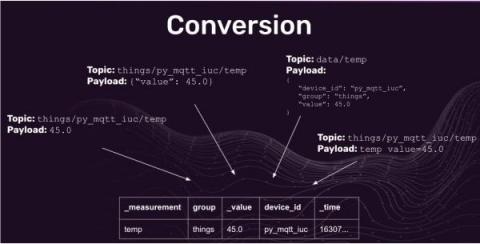
In Telegraf 1.19 we released a new JSON parser (json_v2). The original parser suffered from an inflexible configuration, and there were a handful of pretty common cases where data could not be parsed. While a lot of edge cases for parsing can be resolved using the Starlark processor, it is still a more advanced approach that requires writing scripts. We have made a lot of enhancements to the new JSON parser that can help you easily read in your JSON data into InfluxDB.

Spark Performance Management Optimization Best Practices | Pepperdata

Gain the knowledge of Spark veteran Alex Pierce on how to manage the challenges of maintaining the performance and usability of your Spark jobs. Apache Spark provides sophisticated ways for enterprises to leverage big data compared to Hadoop. However, the increasing amount of data being analyzed and processed through the framework is massive and continues to push the boundaries of the engine.