Operations | Monitoring | ITSM | DevOps | Cloud

Women's Day Panel: Navigating the Future of Engineering in the Age of AI

How is AI reshaping engineering—and what does it mean for the future of work? At our first GTA Boston Hub event of the year, we brought together engineering leaders from Boston Consulting Group and Athenahealth to dive into one of the most pressing topics today: the rise of generative AI. In this panel, we explore: Key takeaway: This isn’t “human vs AI”—it’s human augmented by AI. The real advantage lies in how we adapt, collaborate, and lead in this new era.

Build Numbers That Actually Make Sense: Branch-Scoped Sequence IDs in Harness CI | Harness Blog

You're tagging Docker images with build numbers. -Build is your latest production release on main. A developer pushes a hotfix to release-v2.1, that run becomes build. -Another merges to develop, build. A week later someone asks: "What build number are we on for production?" You check the registry. -You see,,, on main. The numbers in between? Scattered across feature branches that may never ship. Your build numbers have stopped telling a useful story.

How Harness AI Helps Scale Platform-Wide Support | Harness Blog

--- Key Takeaway: Harness AI helped deflect 95% of the platform support tickets for a major financial institution --- These days, success is often measured by what doesn’t happen: When things go right, the software delivery platform is invisible. But what happens when an organization’s delivery velocity increases multifold? Can the platform still stay out of the way?

How to Plan a Successful CI/CD Migration Without Disrupting Developers | Harness Blog

Modern engineering teams run on CI/CD. It’s where pull requests get validated, artifacts get produced, and releases get promoted to production. That also makes CI/CD migration very risky because you're not just moving a "tool"; you're moving the workflow that developers use dozens or hundreds of times a day. The good news: disruption is optional.

CI/CD best practices | Harness Blog

Modern software teams are under constant pressure to ship faster without breaking production. That’s why CI/CD best practices have become essential for high-performing DevOps organizations. Continuous integration and continuous delivery (CI/CD) help automate builds, testing, and deployments — but simply installing a pipeline tool isn’t enough. Without the right practices, pipelines become slow, flaky, and difficult to govern.

Flaky Tests: The Quiet Killer of Productivity in Your CI Pipeline | Harness Blog

‍Flaky tests are automated tests that pass or fail inconsistently without changes to the code. In this guide, you’ll learn why flaky tests happen, how to detect them automatically in CI pipelines, and how modern platforms prevent them from slowing teams down. Your test went well three times yesterday. It didn't work this morning. You ran it again without changing anything, and now it works. Congratulations, you've just passed a flaky test, and now someone's day is going to be ruined.

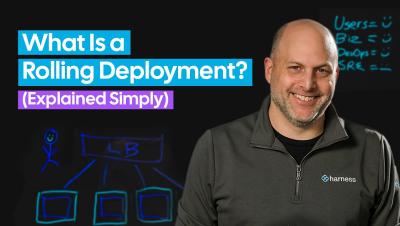
Rolling Deployments Explained: Seamless Software Delivery

In this video, Eric Minick from Harness explains the fundamentals of rolling deployments and how they help maintain a seamless user experience during software updates. Key topics covered include: Whether you are looking for simple implementation or consistent application uptime, rolling deployments offer a powerful strategy for modern software delivery. Learn more about Rolling Deployments and Harness Continuous Delivery.

What Is a DevOps Pipeline? Stages, Benefits, and CI/CD Explained | Harness Blog

A DevOps pipeline is a critical part of modern software delivery. It is a series of automated steps that move code from commit to production quickly, reliably, and consistently. At its core, a DevOps pipeline is a system that helps teams build, test, and release apps in an easier way. It cuts down on manual work and mistakes. This helps teams send out updates more often, make better software, and react quickly when the business needs change.

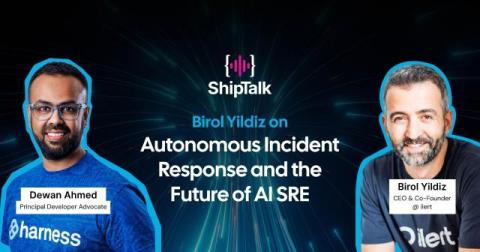
Birol Yildiz on Autonomous Incident Response and the Future of AI SRE | Harness Blog

At SREday NYC 2026, the ShipTalk podcast welcomed Birol Yildiz, Co-founder and CEO of ilert, for a conversation about the next evolution of incident response. In the episode, ShipTalk host Dewan Ahmed, Principal Developer Advocate at Harness, spoke with Birol about how artificial intelligence is transforming reliability engineering—from simply assisting engineers during incidents to autonomously diagnosing and resolving outages.