The New Ubuntu Installer | 23.04 Lunar Lobster
Introducing the new Ubuntu Desktop installer. A modern user interface, improved configuration options and a celebration of the mission of Ubuntu Desktop, to make Linux accessible to all.


In a previous blog, we talked about patterns to run a database in a highly available manner. In this blog, we present our open source recipe for PostgreSQL high availability.
Over the years, our enterprise data centre users have told us how much they love the end to end experience of an application-centric solution like Juju to manage their entire infrastructure. Juju is a software operator framework that abstracts the specifics of operating complex software and makes it simple and straightforward to deploy, operate and relate complimentary pieces of software, reducing cost and providing flexibility.
Following the release of upstream Kubernetes on 11th of April, Canonical Kubernetes 1.27 is generally available in the form of MicroK8s, with Charmed Kubernetes expected to follow shortly. We consistently follow the upstream release cadence to provide our users and customers with the latest improvements and fixes, together with security maintenance and enterprise support for Kubernetes on Ubuntu.
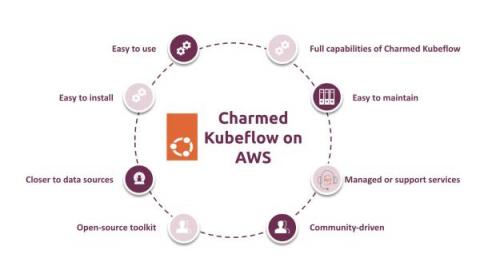
Canonical is proud to announce that Charmed Kubeflow is now available as a software appliance on the Amazon Web Services (AWS) marketplace. With the appliance, users can now launch and manage their machine learning workloads hassle-free using Charmed Kubeflow on AWS. This reduces deployment time and eases operations, providing an easy-to-install MLOps toolkit on the public cloud.
Data pipelines are the backbone of Machine Learning projects. They are responsible for collecting, storing, and processing the data that is used to train and deploy machine learning models. Without a data pipeline, it would be very difficult to manage the large amounts of data that are required for machine learning projects.
Why do we want to eliminate trust? Isn’t trust a good thing that we should foster and grow? And shouldn’t computing platforms trust their end-users, and vice versa? The short answer is no. And I would argue that the very goal of system security has always been to reduce trust.
In recent years, data science, AI and software development have become a key focus area for organisations operating in every sector of the economy. This creates a pressing need to adopt Linux desktops in the enterprise, as research clearly shows a growing number of data scientists and developers prefer operating systems like Ubuntu.