Operations | Monitoring | ITSM | DevOps | Cloud

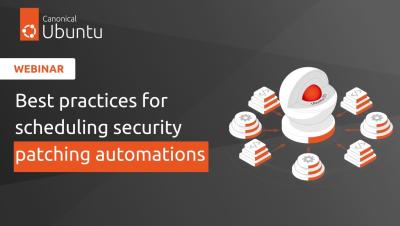
Best practices for scheduling security patching automations

In this webinar, you’ll learn about Canonical's release schedule for Ubuntu and its security updates, and how you can use this information to set optimal manual and automated security patching maintenance intervals. There are a variety of tools, such as Livepatch, Landscape, Snaps, and command line utilities like unattended-upgrades that provide security patching automation capabilities. We’ll cover how each one works, and how you can combine them for maximum benefit. We’ll also cover the nuances between reboot recommended and reboot required.

Vector databases for generative AI applications

Join us for a deep dive into the role of vector databases in generative AI applications. Vector databases facilitate efficient data representation, retrieval and manipulation, enabling AI systems to generate high-fidelity outputs across various domains, from natural language processing to image synthesis. This webinar will discuss various concepts, such as generative AI, retrieval augmented generation (RAG), the importance of search engines, and efficient open source tooling that enables developers and enthusiasts to build their generative AI applications.

Ubuntu AI | S2E5 | All about Ops: DataOps, MLOps, DevOps, AIOps

The emergence of DevOps has changed the way enterprises handle software delivery processes, leading to faster and improved quality. After DevOps has been coined, other practices such as DataOps, MLOps, and AIOps have emerged. In the podcast, Michelle and Andreea, Data PM and AI Product Managers, respectively, will be discussing the significance of these Ops processes in streamlining and optimizing enterprise data, machine learning, and AI projects and use cases.

AI on Public Cloud with Open Source

AI is at the heart of a revolution in the technology space. Organisations from all industries are looking for ways to put AI to work. Once they have finalised use case assessment, their next question is typically related to the environment they will use to develop and deploy their AI initiatives. They often prefer the public clouds as an initial environment, because of the computing power and ability to scale as projects mature. In addition to the infrastructure, enterprises need software where they can develop and deploy the machine learning models.