Operations | Monitoring | ITSM | DevOps | Cloud

The latest News and Information on CyberSecurity for Applications, Services and Infrastructure, and related technologies.

Kubernetes network policies with Sysdig

Microservices and Kubernetes have completely changed the way we reason about network security. Luckily, Kubernetes network security policies (KNP) are a native mechanism to address this issue at the correct level of abstraction. Implementing a network policy is challenging, as developers and ops need to work together to define proper rules. However, the best approach is to adopt a zero trust framework for network security using Kubernetes native controls.

Finding Zen - How IT Ops and IT Security Can Work Together

It's no secret IT Ops and Security teams don't have the most glowing relationship. The simplistic reason is while Ops is responsible for making work and communication as seamless and accessible as possible (and therefore wants everything open), Security is focused on making it as difficult as possible for the wrong people to get inside (and therefore wants everything closed). But beyond the trite hot takes, fundamentally, both teams want to keep the bad guys out without stifling productivity. And when these two groups work together—Well, it’s magic. Timothy Brown, SolarWinds VP of Security, is here to tell you how to reduce friction with some advice and real-world examples.

Sysdig extends image scanning to Google Cloud's Artifact Registry

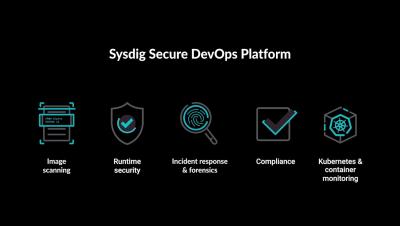
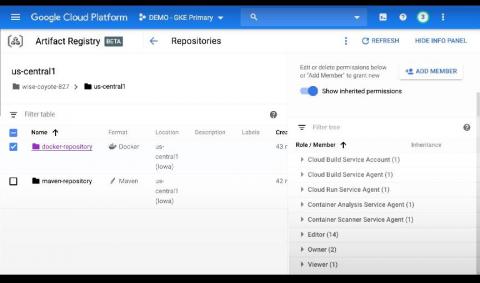
In support of modern application development built on CI/CD, containers and open source, Google Cloud launched Artifact Registry (now generally available), a new artifact management solution. Sysdig helps DevOps teams using Artifact Registry confidently secure the build pipeline with comprehensive image scanning that identifies container vulnerabilities and misconfigurations to reduce risk.

Winning On Tomorrow's Interconnected Battlefields

With the U.S. national security plan highlighting the need for both information dominance and protection, the Department of Defense is considering plans like modernizing military networks to ensure more effective communications between warfighters and allies in the harshest of environments and recruiting the specialized talent required for battlefield domination. To begin, the DoD must bridge the gap between its ambitious vision and the capabilities of current military networks.

Getting up and running with Calico on your Rancher Kubernetes Cluster

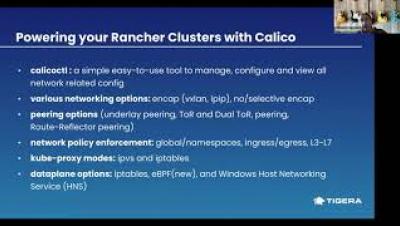
Rancher is a great way to deploy and manage Kubernetes clusters across a broad range of environments, abstracting away many of the differences between the environments, and using Canal for run-anywhere networking. But what if you want to up your networking game to squeeze the most out of your clusters? In this training session you’ll learn about the various networking options available to you in Rancher, and considerations to take into account in order to select the best option for your environment.

Ivanti Patch Management Technology Enhances XM Cyber's Breach and Attack Simulation (BAS) Platform

In today's press release, we announced the incorporation of Ivanti patch management technology into the XM Cyber BAS platform! XM Cyber is a multi-award-winning leader in breach and attack simulation (BAS) advanced cyber risk analytics and cloud security posture management.

How to monitor Kubernetes control plane

The control plane is the brain and heart of Kubernetes. All of its components are key to the proper working and efficiency of the cluster. Monitor Kubernetes control plane is just as important as monitoring the status of the nodes or the applications running inside. It may be even more important, because an issue with the control plane will affect all of the applications and cause potential outages.

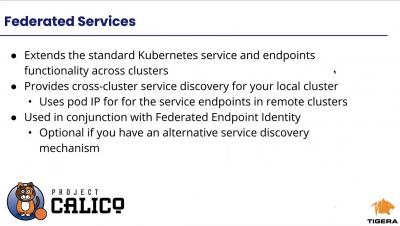
Multi-Cluster, Multi-Cloud and Hybrid Cloud Networking, Observability and Security Management

Managing networking, observability and security in multiple Kubernetes clusters can quickly become a major challenge. Lack of a centralized, unified multi-cluster approach results in dozens of clusters that are deployed and managed independently throughout an organization, with very little uniformity in the way they are secured. This adds complexity for DevOps teams, who must adapt to different cluster environments.