Operations | Monitoring | ITSM | DevOps | Cloud

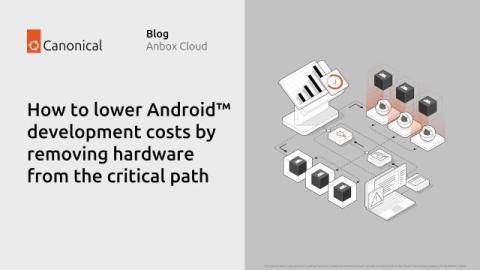
How to lower Android development costs by removing hardware from the critical path

As an Android developer, you’ll almost always have access to a device. However, when handling hardware, the device that you actually need often happens to be already in use, set up incorrectly, stored in another lab, or simply waiting to be reset. That’s when Android development costs start to increase.
Canonical releases Ubuntu 26.10 Stonking Stingray

Today Canonical announced the release of Ubuntu 26.10, codenamed “Stonking Stingray,” available to download and install from ubuntu.com/download. Building on previous releases, Ubuntu 26.10 advances enterprise security features, completes the rollout of the Rust-based uutils coreutils, and strengthens integrations for user authentication using Microsoft Entra ID.

Fixes available for CVE-2026-92392 and other curl vulnerabilities

On 7 October 2026, Daniel Stenberg published a blog post describing a plan to release a new version of curl on 14 October 2026 in order to address 22 known security vulnerabilities. These vulnerabilities have varying severities, with a single vulnerability assessed as high (CVE-2026-92392), while the others have a low or medium severity. The curl maintainer has coordinated with downstream vendors, including Ubuntu, under embargo and the vulnerabilities have been publicly disclosed on the planned date.

Myna speech-to-text is now available as a technology preview

A few months ago, we introduced Myna, our project to bring private, local speech-to-text dictation to Ubuntu Desktop. Named after the speech-mimicking myna bird, Myna is an optional Ubuntu 26.10 feature that offers real-time visual feedback during speech recognition. Since then, Myna has grown into something you can install and use on your desktop. Today, we’re making it available as a technology preview to the wider Ubuntu community.

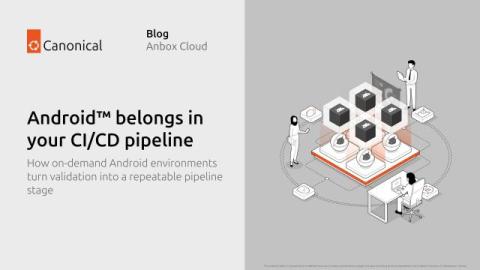
Android belongs in your CI/CD pipeline

How on-demand Android environments turn validation into a repeatable pipeline stage In the first article, we looked at automation: how Android environments can be created and managed programmatically. In the second, we looked at scaling: how shared infrastructure can make those environments available to more developers, tests, and workloads. This third article looks at the next step: integrating those environments directly into CI/CD.