Operations | Monitoring | ITSM | DevOps | Cloud

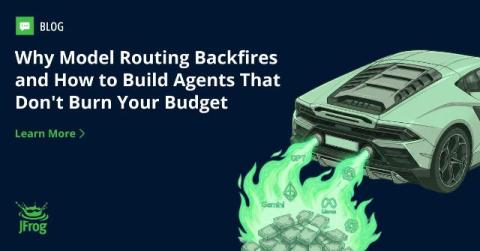
Why Model Routing Backfires and How to Build Agents That Don't Burn Your Budget

Model routing promises to cut your AI agent spend by offloading routine tasks to cheaper models like Claude Haiku while reserving frontier models like Claude Sonnet for complex reasoning. In the right configuration, routing strategies can reduce inference costs by 40–85%. But if you implement routing incorrectly in a multi-turn agent, you can end up paying more than if you’d never routed at all. Here’s why and how to fix it.

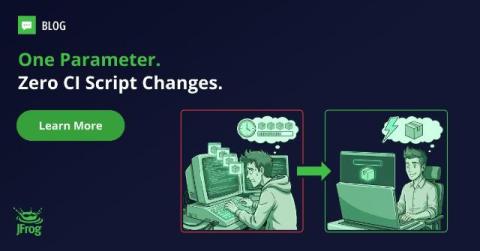
How to Use JFrog CLI Without Editing Your CI Scripts

Using JFrog CLI used to come with a catch. To run a build through it, you had to put it in front of the command. For example, jf npm install instead of npm install or jf mvn package instead of mvn package per the example below: npm install → jf npm install mvn package → jf mvn package Doing that once is easy enough.

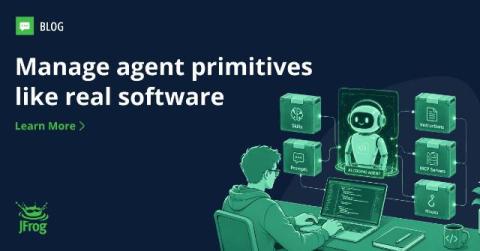
Managing AI Agent Primitives Like Real Software Packages with APM and JFrog

AI agents are part of the modern development workflow. They write code, review pull requests, generate tests, call tools, interact with MCP servers, and help developers move faster. But behind every useful agent, there is something just as important as the model itself: the context that tells the agent how to behave. That context can include skills, prompts, instructions, hooks, commands, scripts, references, and MCP server definitions. In a small project, managing these primitives is pretty simple.

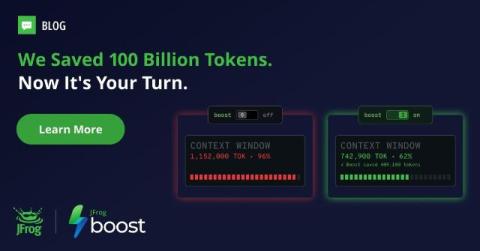
Boost Is Now In Public Preview

Today, we’re excited to announce that Boost is moving out of beta and into public preview. After months of building, breaking, and rebuilding inside JFrog’s own R&D organization, Boost is ready for the world. If you are currently running into token limits, unpredictable costs, or runaway usage from AI agents, Boost was built for you. It has already helped our teams reduce token spend while maintaining performance.