Operations | Monitoring | ITSM | DevOps | Cloud

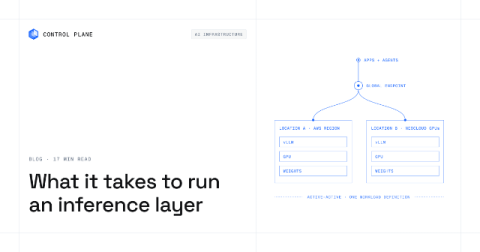
What Infrastructure Do You Need to Run an Inference Layer? A Production Guide

A production inference layer needs GPU compute sized to the model, a serving runtime such as vLLM or SGLang, orchestration that autoscales on queue depth, one endpoint with health-aware routing and failover, model weights cached near the GPUs, and observability, security, and cost controls.
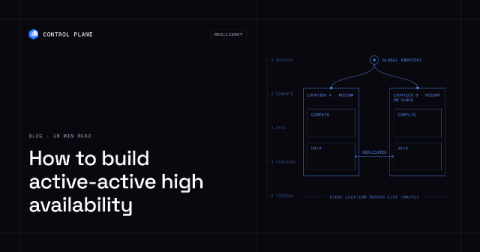
How to Build Active-Active High Availability Across Regions and Clouds

Active-active means two or more locations serve live traffic at the same time, with the application running in each and its data replicated across them, so no location sits idle waiting for a failover. You build it in five layers, and data is the hardest.

How to Add a Neocloud to AWS or GCP Without Running a Second Stack

There is no single best neocloud for AWS or GCP teams. The right one depends on the workload. Bursty fine-tuning and batch jobs reward flexible billing and low hourly rates. Always-on inference and agents reward capacity you can keep plus a second place to run, and data-heavy pipelines reward cheap data movement.

What Is High Availability? How It Works and How Many Nines You Actually Need

High availability (HA) is a system’s ability to keep serving users when individual components fail, from a single server up to a whole cloud region or provider. It is measured in nines: 99.9% allows about 8 hours 46 minutes of downtime a year, 99.99% about 52 minutes, and 99.999% about 5 minutes 15 seconds. HA works by removing single points of failure through redundancy, health checks, automatic failover, and replicated data.

10 Best AI Agent Infrastructure Platforms in 2026

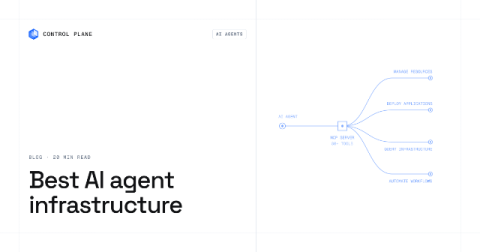
AI agent infrastructure is the set of platforms that run agents and the code they write. It has three layers: sandboxes that isolate untrusted, model-generated code, runtimes that run the agent and its services in production, and orchestration layers that save an agent’s progress so a long run can resume after a failure. Most production agents need more than one layer. This guide compares 10 platforms across all three, with isolation, state, deployment, and compliance for each.

10 Best Multi-Cloud Management Platforms in 2026

A multi-cloud management platform is software that lets you run, provision, govern, or optimize workloads across two or more environments, such as AWS, Google Cloud, Azure, and your own data centers, from one place. The products in this category do different jobs: some run your applications across clouds, some provision infrastructure as code, some govern hybrid estates, and some optimize cost. Most teams combine two or three.