Operations | Monitoring | ITSM | DevOps | Cloud

KPI cards: build a reliability dashboard that doesn't force tradeoffs

This week's Feature Friday: Principal Product Manager Christine Byun walks through KPI cards, a new way to build custom dashboards in Engineering Intelligence. KPI cards pull key metrics, like change failure rate and rollback frequency, into compact tiles so they stay visible without taking up chart space. That means the metric you're actively working, incidents, in this demo, gets full-size room, without losing sight of the rest of your system.

Garbage in, garbage out: Splunk's Steve Flanders on why AI can't fix your bad telemetry

Cortex co-founder and CTO Ganesh Datta sits down with Steve Flanders, who leads AI transformation at Splunk and wrote the book on OpenTelemetry, to talk about why AI acceleration without strong observability foundations creates more problems than it solves.

DRIVE vs SPACE: What each framework measures and when to use them

When Nicole Forsgren, Margaret-Anne Storey, and their coauthors published "The SPACE of Developer Productivity" in 2021, they settled an argument the industry had been losing for years. Productivity is not one number, and it is not a proxy like commits or story points. It is multidimensional, and any attempt to flatten it into a single metric will mislead you. Most of what came after in developer productivity measurement builds on SPACE. SPACE and DRIVE were built for different jobs.

AI can't correlate what was never standardized

Steve Flanders (Senior Director of Engineering, Splunk) makes the case that AI can't save an observability stack that never agreed on a standard. Mix formats across metrics and logs, and AI stops correlating and starts guessing, which means you either make the wrong call or miss the answer you actually needed. OpenTelemetry is one fix, but Prometheus and Fluentd work too. The standard matters more than which one you pick.

A practical guide to risk-based code review

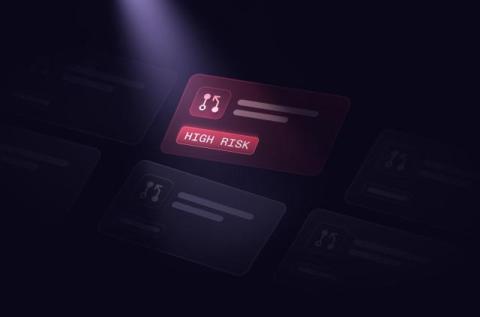
Traditional code review no longer keeps pace with how much code teams are shipping. Risk-based code review is the response: instead of giving every pull request the same scrutiny, you route human attention by risk, letting low-risk changes ship with light or automated review and reserving deep human review for the changes that are expensive to get wrong.

Just ask AI to add OpenTelemetry to your code

OpenTelemetry instrumentation used to mean hours of manual work, wiring up metrics service by service. Now you can just ask for it. Tell an AI agent what you're trying to observe, something like "add OpenTelemetry so I can track this application's performance," and it turns that into an intent specification, then enriches your existing code with instrumentation to match. OpenTelemetry is open source and on GitHub. Pairing it with an AI agent that actually understands your codebase is what turns "add some metrics" into instrumentation that's useful.