Operations | Monitoring | ITSM | DevOps | Cloud

The Two-Sided Scheduling Problem: Reaching the Next Layer of Cloud Savings

You’ve deployed Karpenter or Cluster Autoscaler and tightened your resource requests, but while you saw an initial dip in your cloud bill, your savings have flatlined. Organizations that thought they had the fundamentals of cloud cost under control are now seeing stagnation. The problem isn’t that they need another FinOps tool or better visibility. The problem is that the current state of enterprise cloud cost optimization strategy is fundamentally reactive.
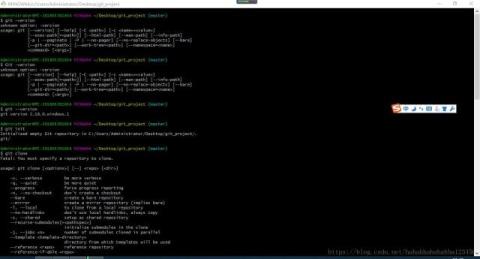
Solved: fatal: Not a git repository (or any of the parent directories): .git

The fatal: not a git repository (or any of the parent directories): .git error means Git cannot find a.git directory in your current folder or any parent folder. In most cases, you are either in the wrong directory, the project was never initialized with Git, or the.git folder is missing or corrupted.

The FinOps Competitive Landscape in 2026 - When Cost Optimization Meets Reliability

The dashboard says you can save 30%. The SRE team won’t sign off. You’ve probably been in this meeting. Finance has a number. The platform team has a scar. Somewhere between them sits a senior manager, maybe you, being asked to choose a cost optimization tool that one side will champion and the other side will quietly refuse to deploy in production. The standoff isn’t about price. It’s about trust.

#058 - The Future of AI and Platform Engineering with Blake Sherwood (Smarsh)

In this episode, special guest Blake Sherwood joins the show to discuss his unique career trajectory from tourism and coal mining to leading massive-scale Kubernetes migrations. Blake shares insights from his experience managing petabytes of data in high-compliance environments, delving into the practical realities of integrating AI into enterprise workflows and observability systems.

#057 - From Pagers to Pair Programming: Navigating Massive Scale and AI with Stefana Muller (Sale...

In this episode of "Kubernetes for Humans," Stefana Muller, VP of Infrastructure & Operations at Salesforce, shares her fascinating journey from technical support to navigating the massive scale of the Own Backup acquisition. Stefana dives into the immense multi-cloud Kubernetes challenges of scaling from 18,000 to over 52,000 clusters, standardizing environments across AWS and Azure, and leveling up security to meet stringent Salesforce standards.

#056 - Cloud Contradictions and Cautionary Tales with Corey Quinn (The Duckbill Group)

In this episode of the Kubernetes for Humans podcast, Itiel sits down with the internet's favorite cloud contrarian, Corey Quinn of the Duckbill Group. Corey shares his unconventional career path as a "cautionary tale," explaining why his knack for fixing horrifying AWS bills makes him a terrible employee, and why he absolutely refuses to touch Kubernetes in production.

Rightsizing Nightmares: When Your Cloud Cost Tool Degrades Performance

This is what production teams see happening. A vertical pod autoscaler recommendation gets applied automatically. Resource requests come down a notch across a namespace. The cost dashboard registers a small cost savings win. A few minutes later, health checks start failing. Pods enter crash loops.

All You Need to Know About CrashLoopBackOff Error

Kubernetes is an open-source container orchestration engine that is used to automate containerized application deployment, scaling, and administration. It is an open-source management platform that can be used to manage containerized workloads and services, as well as declarative configuration and automation. Kubernetes is a framework for running distributed systems in a resilient manner. It handles scaling and failover for your application and provides deployment patterns and other features.

AI for Incident Response: Should You Build or Buy?

SREs and platform teams are overwhelmed by the effort of manually troubleshooting ever-more complex cloud-native environments. This pain is driving a breakneck adoption of AI SRE solutions that promise to automate core reliability practices, from root cause analysis to capacity planning. For teams with strong engineering talent, creating a DIY AI SRE seems like a straightforward challenge.