








Los Angeles, CA, USA
2019
  |  By Noah Grinstein
If your team is outgrowing a simple PaaS and you do not want to spend a year or more building a platform engineering function, adopt a platform that operates Day 2 for you. Control Plane patches and upgrades the platform, autoscales and right-sizes workloads, and runs them active-active across regions and clouds under a 99.999% SLA. It runs natively on AWS, GCP, and Azure, and on your own clusters or on premises through Bring Your Own Kubernetes.
  |  By Hakan Karaduman
Run production AI agents on infrastructure with hardware-level isolation, sub-second sandbox restarts, and a compliance posture that already covers PCI DSS, HIPAA, and GDPR, so a single misbehaving agent can’t touch another workload or your audit trail. Control Plane runs every agent workload in a Kata Containers sandbox on a per-workload Firecracker microVM, with Capacity AI packing resources and scaling workloads dynamically to cut compute cost 30-50%.
  |  By Noah Grinstein
Most disaster recovery plans are designed to survive infrastructure failures — a zone goes down, a region becomes unavailable — but assume the cloud provider itself stays up. That assumption fails more often than engineering teams expect, and when it does, the gap between a team that keeps running and a team writing incident reports isn’t luck: it’s whether DR was an architectural default or a runbook nobody has tested.
  |  By Hakan Karaduman
99.999% availability allows about 5 minutes 15 seconds of downtime per year, or about 26 seconds per month. That budget includes every failed deploy, certificate expiry, DNS misconfiguration, and provider incident in the request path. One regional outage lasting an hour consumes more than 11 years of five-nines budget. This guide explains which architecture tiers can reach that number, which cannot, and why.
  |  By Aykut Bulgu
Sovereign cloud is a system design problem. It asks where workloads run, where data lives, who can administer the system, which legal authorities can compel access, who controls encryption keys, and where backups, telemetry, and control-plane metadata land. Selecting a region answers only part of that problem.
  |  By Aykut Bulgu
Kubernetes has become a standard foundation for modern containerized applications, but operating clusters still requires significant engineering work. In the CNCF’s 2025 annual cloud native survey, published in January 2026, 82% of container users reported running Kubernetes in production. As adoption matures, the question for many teams is no longer whether to use Kubernetes, but how much of the operational burden they want to own.
  |  By Aykut Bulgu
Consider a platform team that spends four months building a thorough migration plan. Its pilot, a stateless order-status API, runs on AWS within three weeks. Six months later, that API is still the only workload in the cloud. In this scenario, the blockers are not exotic technical failures.
  |  By Nathan McNeill
Heroku is not shutting down. On February 6, 2026, Heroku CPO Nitin T Bhat announced that the platform was moving to a sustaining engineering model: new feature development has stopped, but Heroku remains actively supported and production-ready. There is no announced EOL date or migration deadline, existing apps can keep running, credit-card customers can continue using the service, and existing Enterprise customers can renew. What changed is the roadmap, not immediate availability.
  |  By Aykut Bulgu
DevOps platform feature lists increasingly look alike. CI/CD, multi-cloud, observability, GitOps, and AI-friendly automation can all appear as checkboxes while the implementation burden still falls on your team. The useful signal appears when you ask how each capability actually works, what evidence a vendor can show, and which parts your team still has to build. Can pipelines authenticate with a scoped machine identity? Can workloads reach cloud APIs without static keys?
  |  By Aykut Bulgu
Most teams that say they have an enterprise cloud strategy mean that they have workloads running on a hyperscaler and a set of compliance controls documented somewhere. That is a cloud deployment, but it is not necessarily an enterprise cloud operating model. Google Cloud’s 2025 platform engineering research with ESG describes platform engineering as a strategic discipline tied to delivery, governance, and operational outcomes, rather than simply another infrastructure cost.
  |  By Control Plane Corporation
AI-generated code security is the part nobody plans for. Ross Hendrickson, CTO of Inspectiv, on what happens after the AI writes it. He can think of a feature and ship it the same day, generating more code than a week of writing it by hand would have produced. The vulnerabilities don't disappear along with the typing. Something still has to review what was generated, secure it, and get it out the door without becoming the new bottleneck.
  |  By Control Plane Corporation
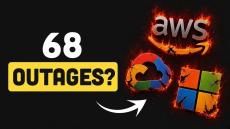
I pulled every core-service outage AWS, Azure, and GCP published from January 2025 through September 2026 and measured what each deployment pattern would have saved.
  |  By Control Plane Corporation
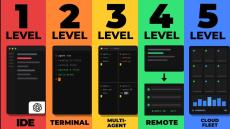
If you're trying to run more than a few AI coding agents at once, the real problem shifts from prompting to managing where they live and what they can reach. This video walks through the five levels of agent management, from the IDE all the way to a fleet running in the cloud with access to your own services.
  |  By Control Plane Corporation
Kintsugi puts sales tax compliance on autopilot for 7,300 companies selling into 110 countries, and its tax engine sits inside other companies' checkouts. The answer has to arrive before the shopper finishes paying. "Typically, a customer's expectation is that we are returning the sales tax estimate on the invoice within 100 milliseconds." The cost of missing is not abstract: "For every minute that our sales tax API, if it ever goes down, our customers are not able to collect roughly $4 million in sales tax that they should be collecting.".
  |  By Control Plane Corporation
Matt Zytaruk, VP of Technology at Minga, on what changed once his developers could point their AI tools at their own infrastructure. Minga checks in 1.5 million students across the eastern seaboard every school morning. They run that platform on Control Plane, which gives their team an MCP server, a CLI, and Terraform-native resources — so a developer can investigate an issue and generate the code for the change without waiting on anyone.
  |  By Control Plane Corporation
"Hey, I built this over the weekend. I want to get it in front of customers." And it always hits architecture, security, and infrastructure. Ross Hendrickson, CTO at Inspectiv, calls that gap the chasm. His team crosses it on Control Plane: AI-written code secured, reviewed, and released in a day. Control Plane combines AWS, GCP, Azure and your own hardware into one virtual cloud shaped to your workloads.
  |  By Control Plane Corporation
When your platform is tied to a single cloud, every move turns into a migration. This team decided it didn't have to be. In this clip, a Control Plane customer explains how separating their platform from the cloud provider underneath changed the math on infrastructure. Instead of being locked to one vendor, they can pick the best services from each cloud and move workloads to AWS without jumping through hoops. The kicker: a migration whose sheer scale would have "scared them off" becomes a non-event once your platform isn't welded to a single provider. Control Plane is an AI-native virtual cloud.
  |  By Control Plane Corporation
"The biggest surprise was how much support we've gotten from the Control Plane team." — Minga Most teams know the drill: unless you're paying a lot, you don't get real support from GCP or AWS. Minga found the opposite with Control Plane. Whenever an infrastructure issue comes up, the Control Plane team jumps in — digging through logs, tracking down the root cause, and staying in the trenches even when the problem isn't theirs to fix.
  |  By Control Plane Corporation
Whether utilizing AI (Claude, Gemini, ChatGPT, etc.) or authoring by hand - BoomURL.com is the easiest and fastest way to get a never expiring URL online. Share it with your friends - or with the whole planet. Free forever..
  |  By Control Plane Corporation
Minga checks in 1.5 million students across the eastern seaboard by 8:30 AM Eastern — then lets that infrastructure wind down an hour later. After migrating to Control Plane, they cut infrastructure costs 30–40% and traded fragile, manual scaling for a platform that scales itself.

Run compute anywhere, combine cloud services, boost developer productivity, and slash costs.

Control Plane is a hybrid platform enabling cloud architects to combine the services, regions, and computing power of Amazon Web Services (AWS), Google Cloud Platform (GCP), Microsoft Azure and any other public or private cloud to provide developers with a flexible yet unbreakable global environment for building backend apps and services.

On Control Plane, microservices can run simultaneously on any combination of cloud compute and consume any combination of cloud services without embedded credentials. The platform handles identity conveyance and authorization uniformly, utilizing best-practices/least privilege principles consistently and securely.

Benefits of Control Plane:

  • Ops without the Pain: Best in class Ops, codified, using tools you already know and trust.
  • Virtual Cloud: Mix-n-match services from AWS/Azure/GCP in a single workload.
  • Multi-Region: Ultra-low latency and unbreakable 99.999% availability.
  • Spend Less: Only pay for the CPU/RAM/egress workloads actually consume.

The Global Compute Platform Enabling Multicloud-Native Apps.